
How to Hike the Avalanche Lake Trail in Glacier National Park + Tips & FAQs
This guide contains affiliate links to trusted partners.
When exploring the outdoors, I encourage you to follow Leave No Trace Principles and be respectful of where you are so we can preserve these spaces for future generations. ♥️
Planning on taking on the Avalanche Lake Trail in Glacier National Park?
I’ve completed the Avalanche Lake Trail numerous times, and I never get tired of it. This was one of the main hikes my parents used to take me on as a kid (via backpack since I was too young to take it on myself), and it’s the one I typically take first-time visitors to the park on when they come to visit!
That being said, getting parking for this hike can be difficult. With Glacier National Park becoming so popular over the past few years, this also tends to be the hike that most visitors gravitate for. Plus, you’re also sharing it with the Trail of the Cedars parking lot!
I don’t know how many times I’ve had to choose a different trail because there was no parking available. Luckily, there are some ways to get around it and to still make sure you knock this iconic hike off your list!
In summary: This guide will cover the basics of how to get to Avalanche Lake and what it’s like to hike it, as well as personal tips from me on how to make the most of it (and increase your likelihood of getting a space).
Quick tip: Watch out for roots on this hike! I’ve tripped over many–they tend to sneak up on you!
Quick Stats
Distance: 5.9 miles
Difficulty: Moderate
Elevation gain: 757 feet
Time on trail: 2 hours and 28 minutes
How to hike to Avalanche Lake
After entering Glacier National Park from the West Entrance, you’re going to drive about a half hour on Going-to-the-Sun Road past Lake McDonald Lodge until you reach the sign for the Trail of the Cedars boardwalk. The Avalanche Campground is located right after that.
Trail of the Cedars is a loop, so either way, you will be starting your hike here. I highly recommend not just rushing to the Avalanche Lake trailhead and taking some time to appreciate some of the beauty of this stroll. You already fought for that parking spot–take some time to enjoy it!
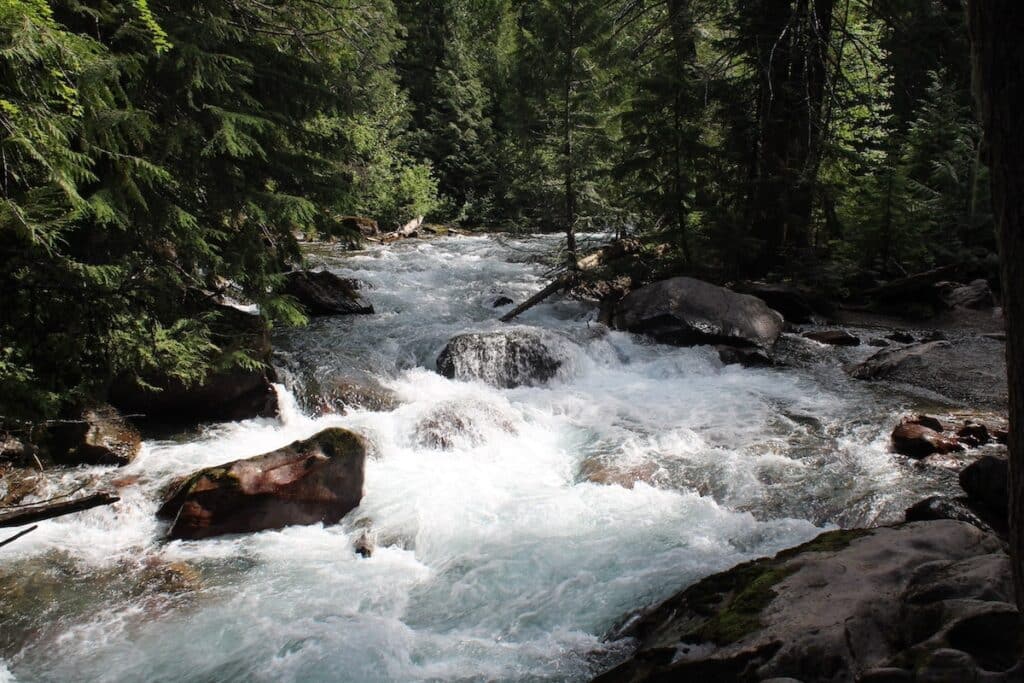
Once you have passed Avalanche Gorge (or you have walked beside it coming from the other side of the loop), you will see a sign for the Avalanche Lake trailhead. You’ll start heading uphill for a while before you reach a few overlooks for Avalanche Gorge. This is a great place for some photo ops since the water here tends to be a Gatorade-blue most the year.
You’ll continue at a gradual incline through forests. Be on the lookout for wildlife like deer, fox, and moose who like to spend time there. While not common, there is also the possibility of running into a bear. Since Avalanche is so popular, it doesn’t happen very often–bears typically avoid trails with a lot of people. Still, it doesn’t hurt to be prepared if you are hiking early in the morning or in the evenings when it is a little quieter and bring your bear spray.
Quick tip: Once you reach areas with clearings, look at the surrounding mountainsides for mountain goats–look for a spot of white since they can easy to miss!
Keep going until you see signs for a pit toilet. If you have to go, you have to go, but I recommend waiting until you get back down to Trail of the Cedars to do any business. It can get pretty nasty.
Once you reach these, you’re a short hike to the beach of the lake. You’ll find some small benches you can sit on to enjoy a picnic lunch or snack, as well as some very friendly chipmunks looking to steal your food. Keep track of your food and your pack since they can get quite aggressive–also remember not to feed any wildlife that you might see there.
I like to scan the lake’s shoreline to see if I can see any of Glacier’s animals. I’ve seen a black bear or two in the mornings before the crowds. Moose and deer are also common here since they use this as a water source. The prettiest water fountain I’ve ever seen!
Also depending on what time of year you decide to hike Avalanche, you’ll see several waterfalls funneling down and filling up the lake. This usually happens in early summer when the first snows are starting to melt.

Once you have had your fill of views and stunning lakes, head back down the way you came along the same trail. If you would like, you can also do the Trail of the Cedars loop the opposite way for some slightly different scenery.
Need help planning your national park trip?

I offer custom national park itinerary planning as a service to help you make the most of your adventures! These itineraries cover everything from where to stay, eat, what to do, and more!
Tips for hiking the Avalanche Lake Trail
Here are some of my recommended tips for hiking to Avalanche Lake.
- Check the weather: Weather in Glacier National Park can change rapidly and can be quite different at higher elevations. Make sure to check the weather forecast before you start your hike and when you plan the best time to visit Glacier National Park. If rain or snow is predicted, it might be wise to postpone your adventure as the trail could become slippery or challenging.
- Pack proper gear: Wearing sturdy, waterproof hiking boots is a must, given the potential for wet and rocky terrain. Also, dressing in layers is key for adjusting to changing temperatures. Carry rain gear, a hat, and sunscreen for protection from the elements. A map and compass are good to have, as cell service can be spotty in the park. Don’t forget a refillable water bottle and snacks for energy.
- Bear safety: Glacier National Park is home to both black and grizzly bears. Carry bear spray, know how to use it, and make noise while hiking to avoid surprising a bear. Never leave food or trash unattended.
- Respect the environment: Stick to the established trail to avoid damaging the park’s delicate ecosystem. Make sure to follow the Leave No Trace principles, which include disposing of waste properly, leaving what you find, and respecting wildlife and other visitors.
- Plan your timing: The trail can get crowded, especially during the summer months. Plan to start your hike early in the morning or later in the afternoon to avoid the heaviest foot traffic. This also helps you to maximize your chances of spotting wildlife, which is typically more active during the dawn and dusk hours.
Join the community! Love the outdoors? Join my free Facebook community where we chat and share information about national parks, hiking, outdoor activities, and more! JOIN HERE!
Map of the Avalanche Lake Trail

Avalanche Lake Trail: FAQs
Here’s some common questions I get from visitors heading to Glacier who want to take on this amazing hike.
Conclusion
If you are a beginning or moderate hiker and you want some excellent payoff for a not-too-difficult hike, then I highly recommend putting this on your list of things to do in Glacier National Park. No matter how many times I hike it, I always come away with a new appreciate of the park’s beauty and even though it is a crowded trail, I am happy to put up with people in order to experience it again.
I’ve tried to include all the details you need in order to hike Avalanche, as well as some of my personal tips and my favorite parts of the hike so you can plan properly.
Have any questions about hiking to Avalanche Lake? Let me know in the comments!
National Park essentials
You’ll need to enter: National parks pass 🎟️
Document your trip: National parks journal ✏️
Wear your national parks love: National parks shirts 👕


