
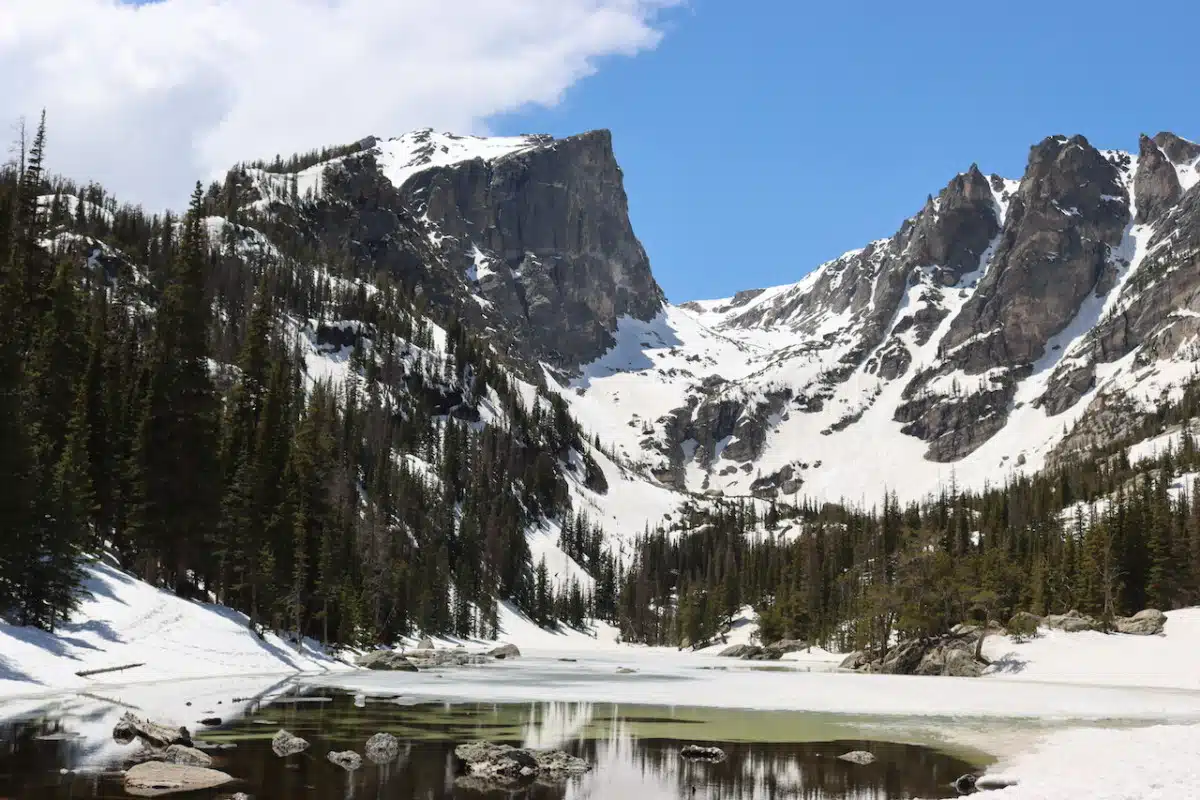
Rocky Mountain National Park
When exploring the outdoors, I encourage you to follow Leave No Trace Principles and be respectful of where you are so we can preserve these spaces for future generations. ♥️
Want some help planning your adventure in Rocky Mountain National Park?
I love Rocky Mountain National Park not only for its many hiking trails and opportunities to spot wildlife (we saw massive bull elk just hanging out in Estes Park), but also because it has a little bit of something for everyone. Want a scenic mountain drive? Done. Hiking trails for beginners and experts? You got it. Delicious places to eat nearby? Sold.
However, navigating the park isn’t the easiest. Between reservation systems that change every year, the growing crowds, and the increasingly volatile weather, Rocky Mountain is more of a challenge to visit than ever before.
I experienced this when Daniel and I visited Memorial Day Weekend the first time we went to Rocky Mountain, right before reservations took hold. We were incredibly fortunate to find parking, but it was sheer luck that managed to get a spot in the Bear Lake Corridor while other visitors were turned away.
If this is your first time in the park, you’ll want to read on for info on how to get there, where to stay, what to see, and more.
Quick tip: I recommend planning your trip to Rocky Mountain at least four months before your planned dates of travel. Since it is a busy park, that means more planning is often required.
Map of Rocky Mountain National Park

Rocky Mountain National Park basics
Date founded: January 16th, 1915
Annual visitation: 4.3 million–it’s the 4th most-visited national park
Location: Colorado
Fun fact: Trail Ridge Road in Rocky Mountain is the highest paved road in the United States.
How to get to Rocky Mountain National Park
f you’re flying, the closest airports are Denver International (about a 1.5-hour drive) and Cheyenne Regional (around 1.75 hours away). I prefer Denver for its more frequent flights and rental car options.
If you’re driving, the park is accessible via Highway 36 to Estes Park or Highway 34 to Grand Lake. I love the scenic drive on Highway 34, especially in the fall. And remember, the park’s popularity means traffic can be heavy, so plan for an early start to avoid the rush!
Top 5 things to do in Rocky Mountain National Park
Here are some things to do in Rocky Mountain National Park I don’t think you should miss while you are there!
1. Bear Lake
My personal favorite, Bear Lake Trailhead, offers family-friendly trails with breathtaking views. Surrounded by mountains and forests, each path leads to a unique landscape, making it a photographer’s paradise and a perfect introduction to the park’s natural beauty.
If you are up for a more difficult trail, this is also the location of several other trailheads including Emerald Lake, Glacier Gorge, Sprague Lake, and more.
2. Trail Ridge Road
The Trail Ridge Road scenic drive is a high-altitude thrill! Ascending above the tree line, it offers panoramic views that I find simply awe-inspiring. Keep your camera ready for those surprise wildlife encounters and jaw-dropping overlooks.
3. Wildlife watching in Moraine Park
Moraine Park is my go-to for wildlife viewing. The meadows here are often dotted with elk and deer, especially during the quieter hours of dawn and dusk. It’s a serene experience that connects you deeply with the park’s wildlife.
4. Alpine Visitor Center
Perched high in the Rockies, the Alpine Visitor Center is not just informative but also offers some of the most stunning views in the park. I love stopping here to learn about the alpine environment and snap a few photos from the overlook.
5. Stargazing at night
The park’s high elevation and remote location make it a phenomenal spot for stargazing. I’ve spent countless evenings mesmerized by the clear, starry skies, a truly unforgettable experience.
When to visit Rocky Mountain National Park
Rocky Mountain National Park is a year-round gem, but each season offers something unique. Summer is peak season, perfect for hiking and wildlife spotting, but it’s also the busiest. I personally adore fall when the aspen trees turn golden and the elk rut is in full swing–fewer crowds too!
Winter transforms the park into a snowy wonderland, ideal for snowshoeing and quieter trails. Spring can be tricky with unpredictable weather and some trail closures, but it’s great for avoiding crowds. My tip? Visit in the shoulder seasons (May and September) for the best experience.
Quick tip: If you do visit in May, make sure to bring your microspikes for hiking. There’s likely to still be snow on the ground!
I recommend three days to visit Rocky Mountain National Park
Three days in Rocky Mountain National Park? Perfect to soak in its beauty without rushing. Day one, I hit the trails around the Bear Lake Road Corridor–easy access and stunning views. Day two is for exploring Trail Ridge Road, the highest continuous paved road in the U.S.–the vistas are breathtaking.
Finally, day three is for a quieter hike in the Wild Basin area, where waterfalls and wildlife are abundant. Each day offers a different aspect of the park, balancing popular spots and hidden gems. And trust me, early starts are key to beat the crowds!
Of course, if you have more time, then there is definitely plenty to do. For those who love to hike, up to a week gives you time to explore the many trails available. I have a full Rocky Mountain National Park itinerary which gives you all the info you need for three days and beyond.
Closest airport to Rocky Mountain National Park
The closest airport to Rocky Mountain National Park is Denver International Airport, about 90 miles away. It’s my go-to for its wide range of flight options and rental car facilities. The drive from Denver to the park is scenic and straightforward, taking you right into the heart of Colorado’s stunning landscapes. Remember, renting a car is essential for exploring the park’s vastness and beauty at your own pace.
Quick tip: Don’t forget to stop in Boulder on your way to the park–there are some excellent hikes and breweries you don’t want to miss.
Where to stay when visiting Rocky Mountain National Park
When visiting Rocky Mountain National Park, I recommend staying in one of the nearby towns. Estes Park, on the park’s east side, is my personal favorite for its charming vibe and easy park access.
For a quieter experience, Grand Lake on the west side is a quaint mountain town with stunning lake views. Lyons, a bit further away, offers a more laid-back atmosphere with unique local shops and eateries. Each town has its own charm and provides a great base for exploring the park.
Much of where you choose to stay will depend on what things you want to do and how early you need to get up in order to enter the park due to reservations and parking.
Weather in Rocky Mountain National Park
Weather in Rocky Mountain National Park is a true mountain experience–unpredictable and varied. Summers are warm but can bring afternoon thunderstorms. I always pack a rain jacket! Winters are cold with plenty of snow, ideal for winter sports enthusiasts but requiring good gear.
Spring and fall can be unpredictable, with sudden temperature drops and occasional snowfall. Layers are your best friend here. Always check the forecast before heading out, as mountain weather can change rapidly, catching even seasoned hikers like me by surprise.
How to get around Rocky Mountain National Park
Getting around Rocky Mountain National Park is part of the adventure. Driving is the most flexible option, but parking can be limited, especially in summer.
I often use the park’s free Hiker Shuttle, which runs from Estes Park and within the park, making it easy to access popular trailheads without the hassle of parking. It’s a great way to reduce your carbon footprint and enjoy the scenery without worrying about navigating. Remember, some roads like Trail Ridge Road are seasonal, so plan accordingly!
Tips for visiting Rocky Mountain National Park
Here are some of my recommended tips to help make your Rocky Mountain National Park trip one that you will never forget–in a good way!
- Start early for wildlife and solitude: I love the peaceful mornings in the park. Getting an early start not only helps in avoiding the crowds but also increases your chances of wildlife sightings. The light is just perfect for photos too!
- Hydrate, hydrate, hydrate: At higher altitudes, dehydration can sneak up on you. I always carry a refillable water bottle and sip regularly. It’s a simple tip, but it makes a big difference in how you feel.
- Keep wildlife wild: It’s tempting to get close for a photo, but it’s safer and more respectful to observe from a distance. I use binoculars or a zoom lens to watch the animals safely.
- Practice Leave No Trace Principles: Keeping the park clean is a passion of mine. Whatever I bring in, I make sure to take out. It’s our responsibility to preserve these natural wonders.
- Discover hidden gems for unique experiences: Popular spots are great, but there’s so much more to explore. Try the less-traveled paths like the Ute Trail for stunning high-altitude meadows or the secluded Chasm Lake trail for breathtaking views. These hidden gems offer tranquility and a chance to connect deeply with nature. Remember, sometimes the best adventures are found off the beaten path!
Articles on Rocky Mountain National Park


Rocky Mountain National Park FAQs
Here are some frequently-asked questions I often get from readers looking for information on Rocky Mountain National Park.
Need help planning your Rocky Mountain National Park trip?

I offer custom national park itinerary planning as a service to help you make the most of your adventures! These itineraries cover everything from where to stay, eat, what to do, and more!
Browse nearby national parks
- Black Canyon of the Gunnison National Park
- Great Sand Dunes National Park
- Mesa Verde National Park