
The Ultimate Rocky Mountain National Park Itinerary
There’s a reason Rocky Mountain National Park is so popular! As one of America’s gems, this park consistently ranks on the list of best parks for its incredible hiking trails, wildlife spotting, and more. I loved my time there, and I wish I had had this Rocky Mountain National Park itinerary to help me plan my trip. With so much to see, you want to make sure you hit up all the highlights, including the fantastic Bear Lake and Trail Ridge Road. If you have some more time than just a few days, I’ve also included some additional activities to round out your trip into one you’ll never forget!
Rocky Mountain National Park requires reservations for the 2023 season. To find out more, head to my guide on Rocky Mountain National Park reservations so you know how to get them and you’re prepared before you go!
[vc_row][vc_column][vc_cta h2=”Do you have these items for your trip?”]Flights: I recommend CheapOAir ✈️
Car rental: I recommend Rentalcars.com 🚗
Travel insurance: I recommend SafetyWing 🤒
Accommodations: Places to stay near Rocky Mountain National Park 🏨
Activities: Things you have to do 🥾
Your gear: Check out my packing list! 🎒
[/vc_cta][/vc_column][/vc_row][vc_row][vc_column][vc_column_text]
Everything you need to know for your Rocky Mountain National Park itinerary
I’ve got you covered with this Rocky Mountain National Park itinerary for multiple days!
[lwptoc hideItems=”1″]
 Below are the most frequently asked questions related to curating the perfect Rocky Mountain National Park itinerary!
How many days do I need in Rocky Mountain National Park?
Visiting Rocky Mountain National Park is a bucket list destination for many, for many obvious reasons notwithstanding the park’s natural beauty. It begs the question, however, of how many days should be spent exploring this national park.
While it ultimately comes down to preference and availability, it typically takes 2-3 days to see the park’s major attractions. With that said, if you’re looking to have a more comprehensive visit, taking into account longer hikes, more leisurely activities, and more leisurely days, 5-7 days will likely suffice!
How do I get to Rocky Mountain National Park?
For starters, if you’re not yet in Denver, Colorado, you need to find a way to get there, whether via flying, driving, or otherwise; this, of course, largely depends on where your departing destination is in relation to Denver and, more specifically, Rocky Mountain National Park.
Upon arrival at Denver International Airport, however, getting to the Rockies isn’t too difficult. In fact, your only concern upon arrival is to find a means of transportation that will get you to Estes Park, about 80 miles northwest of Denver International.
Whether via a rental vehicle, shuttle bus, Uber, or cab, the ride from the airport to Estes Park, then proceeding to Rocky Mountain National Park, tends to take about 1.5-2 hours.
Finally, if you’re deciding to drive on your own rather than a professional shuttle service or public transportation, you might want to consider taking the scenic route via the Peak to Peak By-Way!
 When is the best time to visit Rocky Mountain National Park?
 When is the best time to visit Rocky Mountain National Park?
Because of its abundant offerings no matter the season, any time of the year is a good time to visit Rocky Mountain National Park, whether during the summer, winter, or somewhere in between.
With that said, for the ultimate Rocky Mountain National Park itinerary, you might want to consider visiting during the peak season of June to September. Why? well, for starters, the weather is the most ideal for exploration. Absent of snow and ice, it’s during these months that you can take advantage of all the incredible hiking opportunities it offers.
In addition, because of the rigid climate during the winter, many of the most desirable activities are shut down for safety and accessibility concerns. For these reasons and more, the best time to visit the Rockies is during the summer months of June to September.
What cities are near Rocky Mountain National Park?
When visiting Rocky Mountain National Park, there are a lot of cities and destinations that you’ll want to cross off the list. So, in this Rocky Mountain National Park itinerary, we’ve compiled a list of cities near the park itself that is worthy of visiting while you have the chance to do so.
While some of the following destinations are more so towns than cities, they’re all great day trips, comprising great restaurants, accommodations, and attractions to indulge:
- Estes Park
- Boulder
- Denver
- Nederland
Although you might not have time to visit all of the above cities and towns on the list, it’s worth choosing a couple at the very least.

What time does Rocky Mountain National Park open?
You’ll be happy to learn that Rocky Mountain National Park is open and operating year-round, 24 hours a day, 7 days a week, 365 days total! While there may be some days that they shut down for weather and safety purposes, there’s typically little concern as to the availability of access.
[vc_row][vc_column][vc_cta h2=”Join the community!”]Love the outdoors? Join my free Facebook community where we chat and share information about national parks, hiking, outdoor activities, and more!
JOIN HERE! ⛰️ [/vc_cta][vc_column_text]
How much does it cost to get into Rocky Mountain National Park?
Fees and entry passes associated with Rocky Mountain National Park depend on which passes you opt for, how many passes you are purchasing, and the age at which the individual is at the time of purchase. Heck, it even depends on what mode of transportation you’ve arrived in!
With that said, in this Rocky Mountain National Park guide, we’ll share a summary below of associated fees and expenses for entry:
- 1-Day Pass Excluding Vehicle is $15
- 1-Day Pass Including Vehicle is $70
- 1-Day Pass Including Motorcycle is $25
- The annual Entry Pass is $70
- Entry Pass for the U.S. Veterans is FREE
Other associated fees may include lifetime passes, commercial tour passes, and adolescent passes. Be sure to check their website to learn more before your visit to ensure no surprises occur at the gate!
I highly recommend picking up an annual national parks pass if you plan on seeing more than one park. You can get into multiple national parks for $80 USD a year and have it mailed directly to your door beforehand so you can save time in line.
Does Rocky Mountain National Park require vehicle reservations?
 Does Rocky Mountain National Park require vehicle reservations?
When planning your Rocky Mountain National Park visit, you might be wondering whether or not you have to pay for a vehicle reservation should you be arriving in a rental vehicle or your own personal vehicle.
The short answer is yes. When entering Rocky Mountain National Park, they do require both an entry pass and reservation should you plan on parking your vehicle for any duration of time. The reservation fees are based on time. Visit their website to learn more about associated fees and how that can affect which parts of the park you can visit.
How do I get around Rocky Mountain National Park?
There are a few different ways to get around the park, so you’re not completely out of luck if you decide not to rent a car. Here are some options to keep in mind for you trip!
Car and camper rentals in Estes Park
Arguably the best way to get around Rocky Mountain National Park is via your own personal vehicle or camper. Luckily, you can rent one should you not have one of your own.
Not only does having your own vehicle give you the freedom to explore at your discretion but it also is the most convenient and accessible, giving you the ability to reach roads and access points with ease, not to mention allowing you to exit the park should you want to explore the cities and towns that surround it.
Rocky Mountain National Park shuttle
Second, only to vehicle rentals are taking the Rocky Mountain National Park shuttle. Not only is it completely free to take advantage of but it also reaches many of the roads that a rental vehicle can reach. The only downside is that shuttles, rightfully so, run at their own scheduled times, forcing you as a visitor to tailor your schedule to the schedule of the shuttles. They’re also likely slower than if you were behind the wheel of your own vehicle.
Nevertheless, a convenient and suitable option!
Tours of Rocky Mountain National Park
Finally, if you’re unfamiliar with the park itself and you’d prefer to take advantage of the experts who are familiar with the ins and outs of the park, its attractions, and its history, tours are a great alternative!
Not only will tours take you to the most desirable locations without any worry on your behalf but you’ll also meet some like-minded people along the ride whilst also learning some pretty cool facts.
Also, if you don’t manage to get your reservations, a tour is way to see the park (including some of its best attractions like Trail Ridge Road and Bear Lake) without the hassle of planning on your own.
How long does it take to drive through Rocky Mountain National Park?
 How long does it take to drive through Rocky Mountain National Park?
If you’re in the middle of planning your ultimate Rocky Mountain National Park itinerary, you’re likely curious as to how long it takes to drive through the park from end-to-end… If so, the answer is quite simple; about two hours!
Assuming that there are zero stops taken throughout the journey (news flash, there will be!), the drive from end-to-end takes about two hours. With that said, there will be stops. After all, it’s an adventure. Take this information as you will and plan accordingly!
How do you avoid crowds in Rocky Mountain National Park?
Assuming you’re visiting during peak season, the first step to avoiding crowds is to, well, not visit during peak season! Jokes aside, Rocky Mountain National Park, though extremely large, does boast crowds depending on the attraction being visited and the time of year being visited.
As such, in order to avoid crowds, or at the very least, minimize them, it’s important to be the first to arrive for reservations, take shortcuts where applicable, and have an alternative plan should you continue to be met with crowds in certain areas.

Are dogs allowed in Rocky Mountain National Park?
While it might sound like an unusual question due to the fact that the national park boasts an abundance of wild animals within its land, pet dogs happen to be prohibited from all Rocky Mountain National Park grounds, notably its trails, meadows, and tundra.
With that said, dogs are allowed on leashes on roadsides, parking lots, picnic areas, and campsites. Note that these strict rules are to keep everyone safe, from you and your dog to other visitors and the wildlife surrounding.
Where are the best places to stay in Estes Park?
With multiple spots for Estes Park lodging and beyond, it can be difficult to decipher what place is most suitable for you. Luckily, we’ve narrowed down your options so that you can be sure you’re choosing a great spot!
Below are three places you should consider staying if you decide to stay in Estes Park.
Murphy’s River Lodge
481 W Elkhorn Ave
+1 970-480-5081
With access to a relaxing view of the ever-flowing river of Estes Park, as well as Estes Lake, Murphy’s River Lodge is the ideal location to unwind after a long day of adventures and exploration on your feet.
Notably, it also comes equipped with an indoor pool, hot tub, and more! Just two blocks from sought-after downtown Estes, it also happens to be among the most convenient locations.
So, whether you’re hoping to spend most of your time at Rocky Mountain National Park or you hope to extend your adventures outside of the park, Murphy’s River Lodge is the spot for you!
Timber Creek Chalets
2115 Fall River Rd
+1 970-586-8803
This three-star hotel is a great spot to unwind after a long day whilst you reminisce on the amazing day of adventures that’s behind you. While its interior is somewhat outdated, it’s still reliably comfortable and clean.
The best part? While it’s considered a hotel, it actually happens to be 14 separate cabins, providing guests with an authentic Rocky Mountain accommodation experience.
Discovery Lodge
800 Big Thompson Ave
+1 970-586-3336
This motel is a safe and reliable accommodation located in Estes Park. Just walking distance from downtown Estes Park, and nearby a nine-hole golf course, Discovery Lodge is another great option for those hoping to stay nearby all the action.
Offering its guests a free hot breakfast, free WIFI, and well-clean, well-kept and maintained accommodations and amenities, you can be sure you’re staying in a great Colorado residence when staying at the Discovery Lodge in Estes Park!
Tent camping in Rocky Mountain National Park
As an outdoor enthusiast’s dream destination, Rocky Mountain National Park is among the best places to camp in Colorado, let alone America and the world! With several camping destinations to choose from, it can be difficult to know where the best place to pitch a tent is!
Luckily, below we’ve shared the top five campgrounds here in beautiful Rocky Mountain National Park so you can save time on researching and focus instead on planning the perfect Rocky Mountain National Park itinerary.
Here is a list of Rocky Mountain National camping you might want to stay at:
- Aspenglen Campground
- Glacier Basin Campground
- Longs Peak Campground
- Moraine Park Campground
- Timber Creek Campground

Where can I eat near Rocky Mountain National Park?
When discussing Rocky Mountain National Park, the topics of conversation are largely around adventure, exploration, and outdoor opportunities & attractions. Contrastingly, there’s very little mention of the best places to eat in and around the park itself.
Obviously stated, however, you’re going to need to grab a bite to eat at some point no matter how much fun you’re having! That’s why we’ve compiled a list of Estes Park restaurants you’ll want to check out on your trip.
Bird & Jim
915 Moraine Ave
+1 970-586-9832
This newly renovated, newly designed restaurant located in the heart of Estes Park is one that everyone visiting Rocky Mountain National Park should eat at. In fact, it just so happens to be located at the very entrance of Rocky Mountain National Park; can you say convenient?!
Other than its convenient location, Bird & Jim serves the most authentic Colorado cuisine. With an ever-evolving dinner menu, you’re always in for a delicious surprise, whether a healthy and locally sourced meal or an indulgent and glutenous desert.
Dunraven
1700 Colorado Peaks Dr.
+1 970-586-6409
Located in the Estes Park Resort, Dunraven provides its hungry guests with classic breakfast options, mouth-watering lunches, and delicious dinners ranging from hearty Italian to fresh seafood and beyond.
With an option or two for even the pickiest of eaters, Dunraven is a great visit for the entire family to enjoy during a long day of adventures or to kickstart their morning!
Smokin’ Dave’s
820 Moraine Ave
+1 970-577-7427
As you can likely predict from its name, Smokin’ Dave’s is a BBQ Smokehouse serving saucy wings, ribs, and barbecue platters paired with seasonal craft beers that will surely wash down every morsel of hearty meats.
A great destination to hit after a day spent at Rocky Mountain National Park, Smokin’ Dave’s is where the good times keep rolling! Delicious food and great service; what are you waiting for!?

What are the top 5 things to do in Rocky Mountain National Park?
With endless things to do, places to see, and places to go, it can be difficult to create the ideal itinerary for Rocky Mountain National Park. With that said, while you might have to make a few last-minute decisions and audibles on the fly during your visit, there are a few standout attractions and exciting opportunities to make sure that you do.
That’s why I’ve compiled a top five list of the best things to do in Rocky Mountain National Park!
Trail Ridge Road

Perched between Estes Park and Grand Lake, this awe-inspiring road boasting incredible scenery is among the most populated roads in the Rockies. From evergreen forests and alpine hills to sightings of incredible wildlife, Trail Ridge Road is an excursion of a lifetime, dubbed rightfully as an All-American Road.
If you would like to explore one of the easiest hiking trails in Rocky Mountain, then the Alpine Ridge Trail is right off the road. At .6 miles and only 209 feet of elevation gain, it’s a great way to stretch your legs after a long drive.
While Trail Ridge Road might be more exciting than the destination itself, it’s only a portion of the entire adventure. Upon arriving at Rocky Mountain National Park, you’ll be more inspired than ever to continue your adventure!
Beaver Meadows Visitor Center
Declared a National Historic Landmark back in ’01, Beaver Meadows Visitor Center right at the Beaver Meadows entrance is an architectural masterpiece boasting a shopping center, an amphitheater, and even an outdoor observatory where breathtaking views of the Rocky Mountains can be enjoyed.
Regardless of the incredible spectacle that is Beaver Meadows Visitor Center, it also happens to be the hub for information about Rocky Mountain NP and the National Park Service. Curious as to what to do or where to go? Make a stop here and find out all you need to know!
Downtown Estes Park
As a year-round destination, Estes Park is often crowded with locals and tourists alike. Its downtown area, specifically, is one of the most popular, boasting a booming nightlife, impeccable restaurants, and other tourist attractions to indulge in. You don’t even have to go too far to enjoy nature right in the town’s backyard–Lake Estes is absolutely worth a quick stop.
With more than 200 retailers, downtown Estes Park will surely keep you busy for the duration of your visit, no matter how long you choose to explore. Need more information about the park? The Estes Park Visitor Center is happy to help you out.
 Hiking
 Hiking
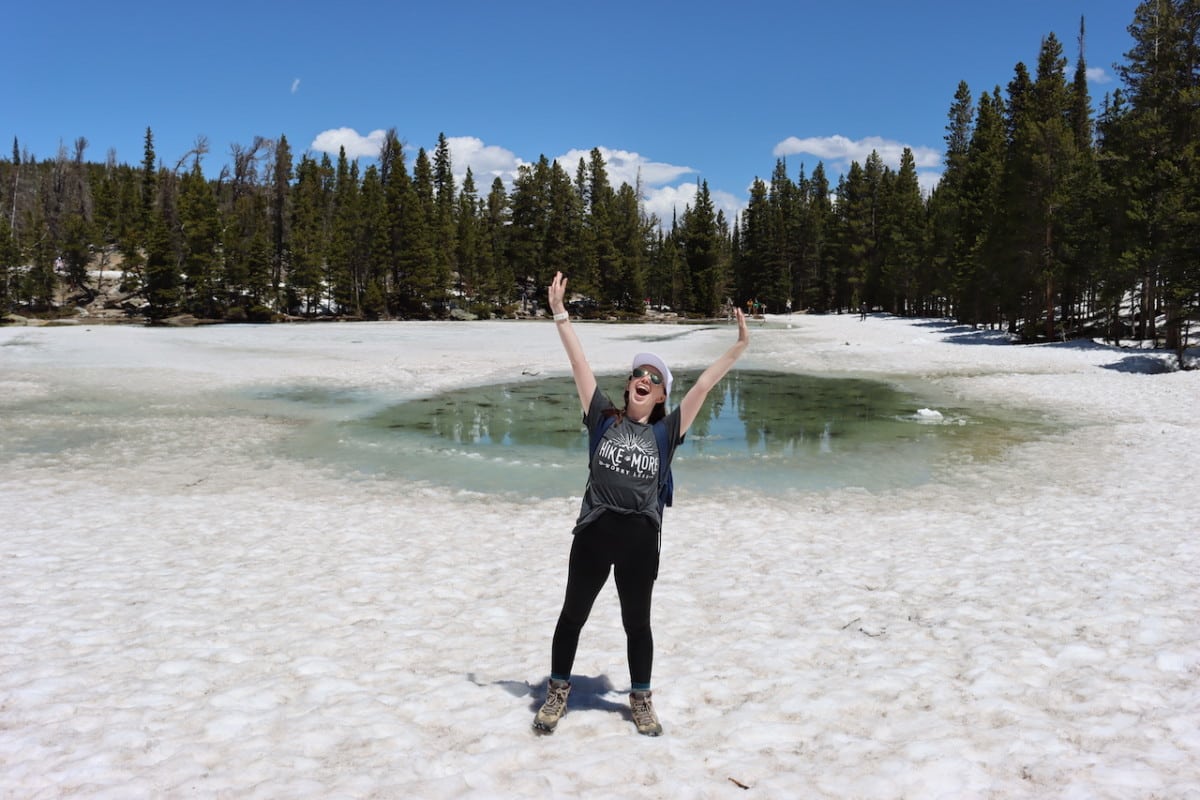
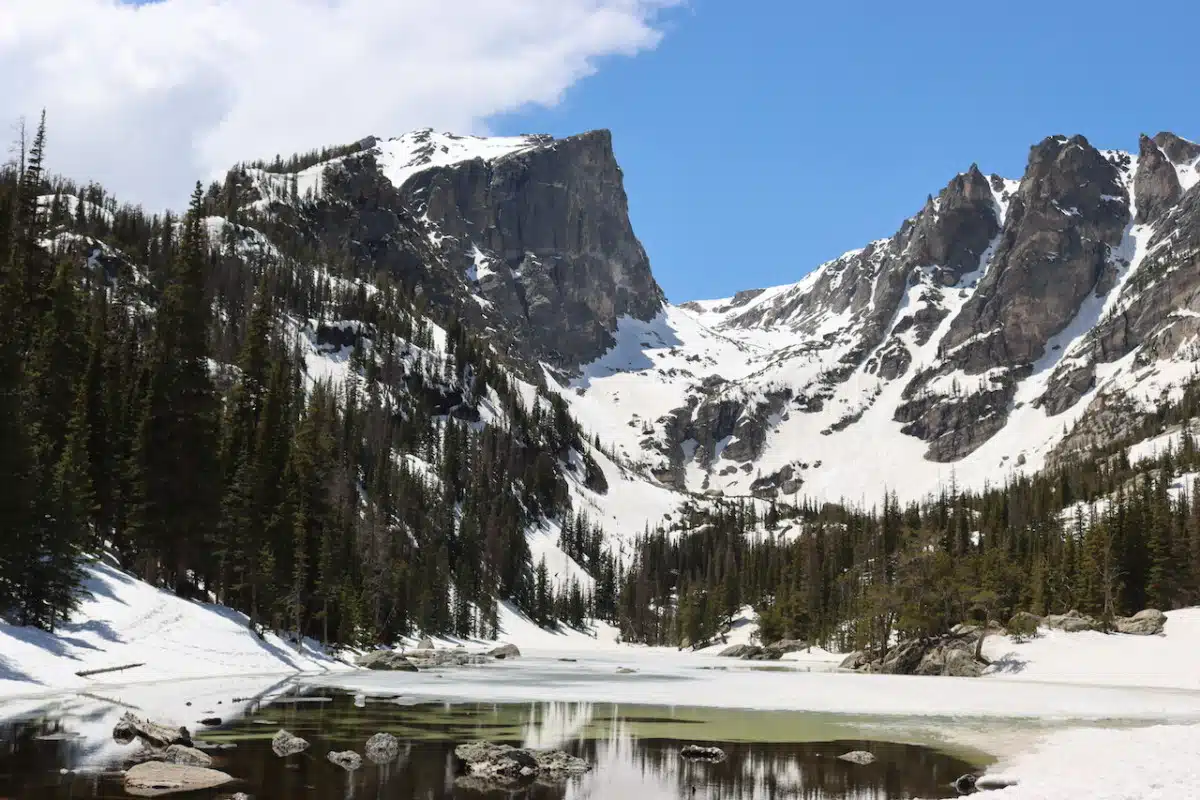
A trip to Rocky Mountain National Park isn’t complete without exploring its many hiking trails. Whether you’re an avid hiker or a leisurely walker, there’s a trail here for everybody; from the Dream Lake Trail to Emerald Lake Trail to Sky Pond and everything in between!
Keep in mind that many of the hikes featuring alpine lakes you might want to take are located at the Bear Lake Trailhead, and parking can be difficult to find. You’ll also need a reservation during certain times of the year.
Whatever trail you choose, be sure to keep your eyes peeled, not only for impeccable views but for rich wildlife nearby! One of the main reasons people come to the area is for the hikes in Rocky Mountain National Park, and it would be a shame to miss them!
Forest Canyon Overlook
Finally, while there are several destinations within the National Park where you can take in inspiring, panoramic views, Forest Canyon Overlook is among the most spectacular, and for obvious reasons…
Over 10,000 feet in elevation, one can only imagine what to expect. Surrounded not only by mountains but canyons eroded by century-old glacier ice, it’s certainly a destination for the books. Don’t forget to bring your camera!
Rocky Mountain National Park backcountry
In order to camp and explore the Rocky Mountain National Park backcountry, you will need a wilderness camping permit and will need to make reservations on the recreation.gov website. Since Rocky Mountain is such a popular park, you might not get the exact itinerary that you want. Make sure your dates and routes are flexible and you’re more likely to get permits to hike and camp.
Once your permit has been confirmed, you will need to pick it up at the Headquarters Wilderness Office or the Kawuneeche Visitor Center. You will have to pay $36 per reservations (not per person if you have a group).
It is possible to get a walk-in permit, but the best way to ensure that you get the permit you want is to make the reservation online. When you are in the backcountry, make sure to carry your permit with you or hang it on the outside of your tent so rangers know you’re good to go.
Map of Rocky Mountain National Park
Below is a six-day Rocky Mountain National Park itinerary that you can’t go wrong with following!
Day 1–Bear Lake Corridor and Dream, Nymph, and Emerald Lake Hike
As a great starting point for this six-day Rocky Mountain National Park itinerary, we begin at Bear Lake trailhead; a popular trail that takes hikers from Bear Lake to Dream Lake.
With miles and miles of scenic views and elevation gain, Bear Lake Road Corridor continues onto both Nymph Lake and Emerald Lake. Generally considered a fairly easy route, this day-one hike is a great introduction to the entirety of what’s about to become an unforgettable Rocky Mountain adventure.
Keep in mind that the Bear Lake parking lot fills up super fast in the morning since it is the starting point for several hiking trails–even with the new reservation system. Make sure that you get there as early as you can or consider going in the early afternoon to avoid not finding a place to park.
Want something more challenging? Consider the Flattop Mountain hike instead for 360-degree views of the surrounding Bear Lake area.
Day 2–Trail Ridge Road, Continental Divide, Many Park Curve
On day two, it’s time for even more emphatic views of the beautiful Rocky Mountain National Park. Today, you’ll drive Trail Ridge Road, leading us through the Continental Divide and onto the Many Park Curve.
If you have some additional time, the Old Fall River Road is located right before Trail Ridge Road at the Fall River park entrance. It’s 11 miles of gravel, so be prepared to have a vehicle that can handle some tight turns on a rocky road. Take your time and go the allotted 15 miles an hour. It’s also much less popular, so you’re less likely to run into a long line of traffic. Once you reach Fall River Pass, you’ll connect with Alpine Ridge Road and Trail Ridge Road, where you can continue on.
 The Forest Canyon Overlook is located along Trail Ridge Road, and you’ll definitely want to stop here or the views. A five-minute walk along pavement leads you to stunning views of Hayden Gorge and Gorge Lakes that you don’t want to miss.
Reaching nearly 12,000 feet of elevation, you can only imagine the views to be discovered here. Once you reach Many Park Curve, you’ll be welcomed not only by incredible views but by a beautiful boardwalk surrounded by forest heads and glacial lake beds. If you’re lucky, you might even capture spectacles of wildlife grazing in their natural habitat!
Note: while Rocky Mountain NP is open all-year, Trail Ridge Road closes from mid-October to Memorial Day when the road is snow covered. Keep this in mind when choosing when you want to visit.
Day 3–Sky Pond, Alpine Visitor Center, Chasm Falls
 Day 3–Sky Pond, Alpine Visitor Center, Chasm Falls
On day three of this Rocky Mountain National Park guide, it’s onto Chasm Falls, beginning, of course, at Sky Pond! Though known to be somewhat of a challenging hiking trail, Sky Pond is the ultimate gateway to the beautiful waterfall known as Chasm Falls. In other words, the entire hike is most certainly worth the trip.
For those less excited about the challenge that is Sky Pond, there’s a much-needed rest stop at Alpine Visitor Center where you can catch your breath, take a load off your legs, and fuel up for the last leg of the hike.
Be sure to bring your camera, for Chasm Falls is nothing short of a geological masterpiece and an amazing aquatic display.
[vc_row][vc_column][vc_cta h2=”Colorado hiking essentials”]Recommended hiking boots: Salomon Quest 4 Gore-tex
Recommended jacket: The North Face Antora Jacket
Recommended hiking poles: Black Diamond Trail Cork Trekking Poles
Recommended day pack: Osprey Daylite Pack[/vc_cta][vc_column_text]
Day 4–Estes Park or take a tour
At the halfway point of this six-day Rocky Mountain National Park itinerary, we do away with the hikes and instead take a guided tour around the famed Estes Park. Today, it’s all about sitting back, relaxing, and taking in the natural beauty of Rocky Mountain National Park in style and comfort.
One of the best tour options in the area is taking a guided rafting tour down the Colorado River. Whether you are looking for some white water or you simply want to float through the gorgeous surroundings of the Rocky Mountains, there are several tour companies right near Estes Park that can take you.
Should a guided tour not be up your alley of interest, simply take a rental car or shuttle bus to the downtown area of Estes Park and enjoy a day of leisure. Whether it’s a shopping day you’d prefer or a day of indulgence at the many restaurants in Estes, the choice is yours on day four of this itinerary.
[vc_row][vc_column][vc_cta h2=”Don’t miss these activities in Rocky Mountain National Park”]
[/vc_cta][/vc_column][/vc_row][vc_row][vc_column][vc_column_text]
Day 5–Mills Lake and Black Lake, Alberta Falls, and Sprague Lake
Resuming hikes and high elevation, Mill and Black Lakes is a longer hike, extending about 11 miles out and back. A popular but challenging route, Mills to Black Lakes is often crowded, both by hikers in the winter and cross-country skiers in the winter.
Not too steep and just the right distance for both amateurs and outdoor experts, Mills Lake and Black Lake is often dubbed among the best trails in the Rockies. Throughout this excursion, you’ll enjoy views of waterfalls and open landscapes and alpine tundra, as well as a likely spotting some Colorado wildlife.
 Not feeling this one but still up for a short hike? Then you might want to consider visiting the Glacier Gorge Trailhead so you get a chance to see Alberta Falls. You can also see Lake Haiyaha on the way, as well. There are no shortage of options for alpine lakes where you can have a picnic lunch in Rocky Mountain NP!
For one of the easier hiking trails, consider Sprague Lake–especially if you have kids. With only 10 feet of elevation gain, it’s the ideal option for those looking for a more relaxed hiking day.
Day 6–Deer Mountain or Glacier Gorge Trailhead
Finally, on the final day of this Rocky Mountain National Park itinerary, we spend at Deer Mountain, a Rocky Mountain peak offering breathtaking panoramic views of the park and its alpine tundra. For that reason alone, Deer Mountain is among the most popular destinations in the park for both locals and tourists alike.
You’re also likely to see a bunch of wildlife like elk, deer, and more. If you plan on seeing some of America’s biggest ungulates, this is one of the best national parks to do so. Bring your binoculars–there’s often no better place to catch these animals in the Rocky Mountains!
Alternative hiking options
Didn’t see a hike that appealed to you? Here are a few more options:
- Odessa Lake (Distance: 8.3 miles, Difficulty: Moderate, Elevation: 2,004 feet)
- Chasm Lake (Distance: 8.8 miles, Difficulty: Hard, Elevation: 2,542 feet)
- Ouzel Falls (Distance: 5.3 miles, Difficulty: Moderate, Elevation: 984 feet)
- Cub Lake Trail (Distance: 6 miles, Difficulty: Moderate, Elevation: 744 feet)
Tips for Rocky Mountain National Park
Here are some quick tips to help make your trip to one of the best national parks one to remember!
- Keep in mind that Rocky Mountain is on the Continental Divide and is located at a high altitude. This means you might experience some altitude sickness due to the elevation gain. Take your time hiking and give yourself a day or two beforehand to get used to the new height–especially if you are planning strenuous hikes and you are coming from sea level.
- Weather in Colorado is variable, even in the summer months. It’s not uncommon to get sunshine, rain, and a snow storm in the Rocky Mountains all in one day. You’ll want to bring multiple layers so you can adjust accordingly.
- Trail closures are common in the park due to weather or maintenance. Make sure to look up information on the trails you’re interested in on the National Park Service website before you go so you know whether your chosen hike is available.
- While it might be exciting to see elk, deer, and Bighorn sheep, you should make sure to leave plenty of distance between you and any wildlife that you might come in contact with. It’s not worth the picture!
Have any questions about your Rocky Mountain National Park itinerary? Let me know in the comments!
[vc_row][vc_column][vc_cta h2=”National park essentials”]You’ll need to enter: National parks pass 🎟️
Document your trip: National parks journal ✏️
Wear your national parks love: National parks shirts 👕[/vc_cta][vc_column_text]
Like this post? Save it for later!
Want more information on Colorado? Check out these articles:
- 19 Perfect Options for RV Rental in Boulder, Colorado
- 20 Incredible Spots for Camping Near Denver, Colorado
- 21 Fantastic Places for Hiking in Colorado Springs
- 20 of the Absolute Best Places for Snowshoeing in Colorado


