

Arches National Park
When exploring the outdoors, I encourage you to follow Leave No Trace Principles and be respectful of where you are so we can preserve these spaces for future generations. ♥️
Planning your Arches National Park adventure?
Arches National Park was our first stop on our trip through Utah and the rest of the Mighty 5. The first thing I noticed, along with the numerous pinnacles, fins, and other formations, as that this is a great park for families. I would have loved to have been a kid and have scampered on the trails and explored the night sky.
On the other hand, Arches is crowded, which is why they now have a reservation system in place that is likely to stay. Getting those reservations for your dates can be tough–and we found that we still had to contend with others for parking spaces at popular trailheads. This was in October too, which is far from the busy season.
This meant that we had to plan a bit more than we typically would on a road trip, and finding options for camping in Moab took more time and effort than it did for our other stops in Utah.
This guide covers some more information on how to plan your trip smoothly, what you should see and do, and how to escape the crowds so you can make memories without a bunch of people in them!
Quick tip: I recommend enjoying the park in reverse to avoid the crowds. Start at Devils Garden and work your way back. By the time you get back to the entrance, most of the other visitors will be past the main sights!
Map of Arches National Park
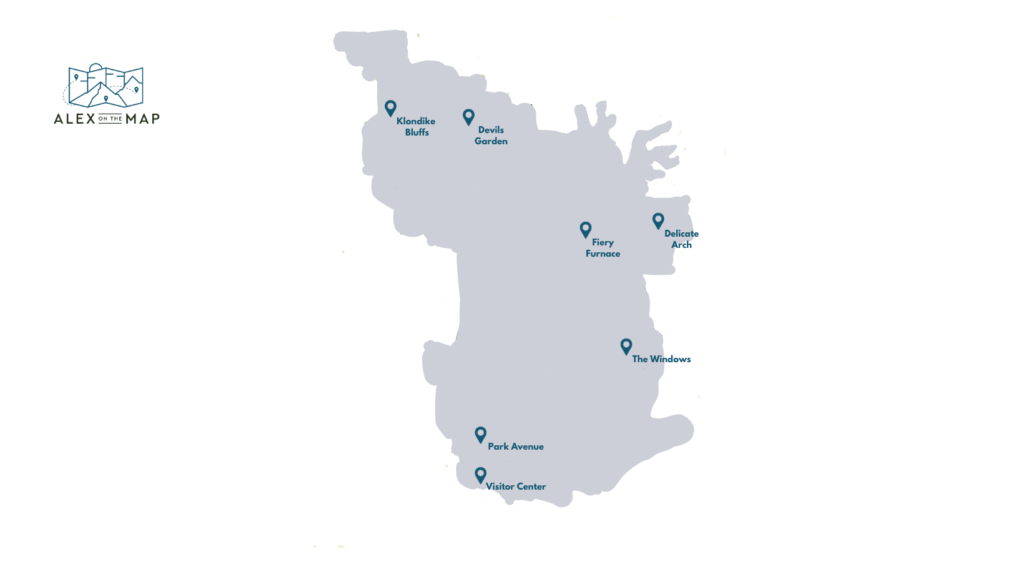
Arches National Park basics
Date founded: April 12, 1929
Annual visitation: 1.4 million
Location: Utah
Fun fact: There are over 2,000 documented arches in the park–plenty to see while you are exploring!
How to get to Arches National Park
Getting to Arches National Park is pretty straightforward. The closest city with a major airport is Salt Lake City, about a 3.5-hour drive away. However, for a closer option, consider flying into Grand Junction, Colorado, which is about a 1.5-hour drive.
From there, you can rent a car to reach the park. Daniel and I found the drive scenic and enjoyable–a great introduction to the stunning landscapes of the American Southwest. The park is located just north of Moab, Utah, making it easily accessible to other sights nearby, as well. This includes Canyonlands National Park and Dead Horse Point State Park–both worth checking out!
Top 5 things to do in Arches National Park
Here are the main things to do that I recommend when visiting Arches!
1. Explore Delicate Arch
Hiking to Delicate Arch is unforgettable. The trail isn’t too long but has some steep sections and drop offs, so make sure to watch your kiddos. Seeing the arch up close, especially during sunset, is magical. It’s busy, so an early start or late visit can mean fewer crowds.
2. Fiery Furnace Hike
This guided adventure through narrow sandstone passages is a highlight. It’s like a natural maze with incredible rock formations. Remember to book in advance, as it’s a popular tour and requires reservations.
3. Devils Garden Trail
Offering a mix of easy and challenging sections, this trail leads you past multiple arches, including Landscape Arch. We spent a full day here, exploring side trails and enjoying the views.
4. Sunset at Balanced Rock
Watching the sunset illuminate Balanced Rock is spectacular. The changing colors of the sky against the rock formation create a stunning backdrop. It’s a great, easy-to-access spot for photographers.
5. Scenic Drive through the park
The scenic drive through Arches offers breathtaking views and access to many trailheads. Daniel and I found it a relaxing way to see the park, with plenty of stops for quick walks or longer hikes.
When to visit Arches National Park
The best time to visit Arches National Park is in the spring (April to May) or fall (September to October). Daniel and I went in October, and it was perfect–not too hot and much less crowded.
Summer can be extremely hot, making hiking less comfortable, and winter can bring cold temperatures and occasional snow. Visiting in the shoulder seasons means you’ll enjoy moderate weather and fewer visitors, making it easier to explore the park’s stunning arches and trails.
I recommend two days in Arches National Park
Two days in Arches National Park are ideal for exploring most of its highlights. In our visit, this timeframe allowed us to cover almost all the hiking trails and take in the park’s famous landmarks. Day one can be dedicated to seeing popular arches like Delicate Arch and Landscape Arch.
On day two, venture into lesser-known areas for a different perspective or take on the Fiery Furnace hike. Two days is also perfect if you have kids, since that way you can take your time instead of rushing from landmark to landmark.
Quick tip: Consider spending four days total in the area so you can see Canyonlands National Park and Dead Horse Point State Park, as well!
Closest airport to Arches National Park
The closest airport to Arches National Park is Canyonlands Field Airport in Moab, Utah, just a short drive from the park. However, for more flight options, many visitors choose to fly into Grand Junction Regional Airport in Colorado, which is about a 1.5-hour drive from Arches.
You’re mostly likely to fly into Salt Lake City International Airport (SLC) realistically, since it has many more available options for flights than either Grand Junction or Canyonlands.
Where to stay when visiting Arches National Park
Moab is definitely the place to stay when visiting Arches National Park. It’s super close to the park and has a great selection of places to stay, from cozy motels to camping spots. The town itself is really lively, with good eateries and shops – perfect for relaxing after a day of exploring. Daniel and I loved the convenience and the friendly vibe of Moab; it made our trip to Arches even more enjoyable.
Moab is really the only option nearby, so you’ll want to book your trip as far in advance as you can since accommodations fill up fast during the busy summer season.
Weather in Arches National Park
Weather in Arches National Park can be quite extreme, with hot summers and cold winters. In summer, temperatures can soar above 100°F, making hiking challenging. Winter brings cold, with occasional snow, but it’s quieter.
Spring and fall are the best times to visit, with milder temperatures. Daniel and I chose October for our visit, and it was just right – not too hot, not too crowded. It’s always a good idea to check the weather forecast before your trip and pack accordingly.
Keep in mind that Arches National Park is also prone to flash flooding, especially during summer and fall. These can occur suddenly, affecting trails and roads. Daniel and I were always alert to weather updates via the National Park Service website, as flash flooding can quickly change your hiking plans.
Quick tip: Plan your most strenuous hikes and activities either early in the day or in the evening to avoid the heat!
How to get around Arches National Park
Navigating Arches National Park is primarily done by car. The park has a main scenic drive that leads to most major landmarks and trailheads. During our visit, Daniel and I found driving the best way to explore at our own pace, stopping at viewpoints and starting hikes.
There’s no public transportation within the park, so having your own vehicle is key. Remember, parking areas can fill up quickly, especially at popular spots like Delicate Arch, so starting your day early can help beat the crowds.
Tips for visiting Arches National Park
Here are some tips I found useful when visiting Arches and ones I would recommend to others.
- Hydration is crucial: In the desert climate of Arches, it’s easy to underestimate how much water you need. During our hikes, we always carried extra, reusable water bottles. Dehydration can sneak up on you, so drink regularly, even if you’re not thirsty.
- Protect yourself from the sun: The sun in Arches can be relentless. Apply sunscreen frequently, wear a wide-brimmed hat, and don’t forget your sunglasses. I learned the hard way how quickly you can get sunburned here.
- Beat the crowds with an early start: Arches can get busy, especially at famous sites like Delicate Arch. We found arriving early not only gave us a more peaceful experience but also cooler temperatures for hiking.
- Pack smart for hiking: Along with water, carry energy-boosting snacks, a trail map, and a basic first aid kit. I always pack a few extra granola bars and a whistle–especially if you are taking on some backcountry hikes.
- Consider seasonal weather: Visiting in October was a game-changer for us. The temperatures were more moderate, and the park was less crowded. Always check the weather before you go; flash floods can happen, especially in summer and fall.
Articles on Arches National Park


Arches National Park FAQs
Here are some questions I commonly get when talking to readers about Arches National Park.
Need help planning your national park trip?

I offer custom national park itinerary planning as a service to help you make the most of your adventures! These itineraries cover everything from where to stay, eat, what to do, and more!