
How to Choose Hiking Boots: What You Need to Know (2023)
This guide contains affiliate links to trusted partners.
Not sure how to choose the right hiking boots for your next hiking trip?
Choosing the perfect hiking boots can feel like a daunting task, especially with the multitude of styles, materials, and features available on the market today. However, the right footwear can be the difference between a miserable hike full of blisters and discomfort and an incredible outdoor adventure where your feet feel supported and comfy every step of the way.
That’s why I’ve put together this comprehensive guide to help you navigate the process of selecting the right hiking boots, so you can focus on the trail ahead instead of worrying about your feet.
Whether you’re a casual day hiker or a seasoned mountaineer, finding the right pair of boots is a journey in itself. From understanding the differences between trail runners and hiking boots, to breaking down the various components of hiking boots, to offering personal recommendations, I’ve got you covered.
[lwptoc hideItems=”1″]
 How to choose hiking boots: FAQs
 How to choose hiking boots: FAQs
When it comes to hiking, having the right footwear is essential for both comfort and safety. In this guide, I’ll cover everything you need to know about choosing the perfect hiking boots for your next adventure.
What types of hiking boots are there?
There are several types of hiking boots, each designed for specific terrains and hiking conditions. These include day hiking boots, backpacking boots, and mountaineering boots. As a seasoned hiker, I’ve tried many of these options, and I’ll walk you through the benefits and drawbacks of each in the sections below.
What is the difference between trail running shoes, hiking boots, and hiking shoes?
Trail runners are lightweight and designed for running on trails, while hiking shoes offer more support and protection for your feet. Hiking boots provide the most stability and protection, especially for longer hikes and challenging terrains. Personally, I love using trail running shoes for shorter hikes and hiking boots for longer, more strenuous treks.
If you are considering some hiking shoes, I highly recommend checking out these hiking shoes. They have plenty of options in a variety of colors–plus they’re super lightweight!
What should I know about hiking socks?
Proper hiking socks are essential for keeping your feet comfortable and blister-free during a hike. They should be moisture-wicking, breathable, and made from materials like merino wool or synthetic fibers. I always recommend investing in a few pairs of high-quality hiking socks to ensure your feet stay happy on the trails.
Also, do not hike in cotton socks. They do not do a good job of keeping your feet dry and are more likely to cause blisters and other rubs.
Recommended hiking socks
[vc_row][vc_column][vc_cta h2=”My recommendations”]
⭐BEST FOR BUDGET: REI CO-OP COOL MAX ECOMADE⭐
⭐BEST FOR SWEATY FEET: DARN TOUGH LIGHT HIKER⭐
⭐BEST FOR BACKPACKING: SOCKWELL PETAL POWER COMPRESSION⭐
[/vc_cta][/vc_column][/vc_row][vc_row][vc_column][vc_column_text]
What is better: high ankle support or low cut hiking shoes?
The choice between high ankle protection and low cut hiking shoes largely depends on your personal preference and the type of terrain you’ll be hiking on. High ankle support is great for added stability and protection, especially on uneven terrain, while low cut hiking shoes are lighter and more breathable.
I prefer high ankle support boots for challenging hikes, but often opt for low cut shoes on more casual outings.
How to fit yourself for hiking boots
 How to fit yourself for hiking boots
Finding the right fit for your hiking footwear is crucial for comfort and preventing injuries. Here’s a step-by-step guide to help you find the perfect pair:
Know your size
Before shopping for hiking boots, measure both of your feet and use a sizing chart to determine your correct size. Remember that your feet swell during a hike, so consider going a half size up for added comfort.
Wear hiking socks
When trying on hiking boots, wear the same type of socks that you plan to wear on the trail. This will ensure a more accurate fit and help prevent blisters.
Wear the hiking boots
Put on the boots and walk around the store to get a feel for how they fit. Make sure your heel doesn’t slip, and that your toes have enough room to wiggle, especially your longest toe.
If there is any rubbing in your toe box, then you will most likely want to consider another size.
Consider ankle support
Think about the type of terrain you’ll be hiking on, and whether high ankle support or low cut shoes would be more appropriate for your needs when buying hiking boots. Ankle injuries can immediately end your hike, so having enough support can be essential.
Consider orthotics
If you have specific foot issues, such as flat feet or high arches, consider investing in custom orthotics to improve the fit and support of your hiking boots, especially if you plan on being off trail on rugged terrain.
Consider insoles
Some hikers may benefit from additional cushioning or support provided by aftermarket, flexible midsoles. Try different insole options to find the one that works best for you, especially if you have had trouble with arch support in the past.
Recommended insoles
[vc_row][vc_column][vc_cta h2=”My recommendations”]
⭐BEST FOR HEELS: SUPERFEET GREEN SUPPORT⭐
⭐BEST FOR ARCH SUPPORT: SOLE PERFORMANCE THICK INSOLES⭐
⭐BEST FOR BACKPACKING: SUPER FEET TRAILBLAZER COMFORT⭐
[/vc_cta][/vc_column][/vc_row][vc_row][vc_column][vc_column_text]
Ask a footwear specialist
Don’t be afraid to consult with a footwear specialist if you plan to shop at a store. They can help you find the best fit and provide recommendations based on your needs.
Practice lacing up your boots
There are various lacing techniques that can help improve the fit and comfort of your hiking boots. Experiment with different lacing systems to find the one that works best for you.
Break in your boots
Before hitting the trails, wear your new boots around the house or on short walks to break them in and prevent blisters during your first hike.
This can help you idea if there are any pressure points you should be aware of and if you’ll be likely to collect blisters or rubs on your hiking experience. the should fit snug but not be too tight.
 Types of hiking boots
 Types of hiking boots
Now that I’ve covered the basic of fitting your new pair of hiking boots, let’s take a closer look at the different types available.
Day hiking boots
Day hiking boots are lightweight and designed for day hikes on well-maintained trails. They provide good support and comfort but may not offer the same level of durability as backpacking or mountaineering boots. I often recommend day hiking boots for beginners and casual hikers.
They also tend to be more breathable shoes than heavier backpacking boots and mountaineering boots. You can also use them for short backpacking trips if needed.
Backpacking boots
Backpacking boots are designed for longer hikes and extended trips, offering more ankle support and durability than day hiking boots. They’re great for carrying heavy packs and can handle rougher terrain. As an experienced backpacker, I find these boots to be essential for challenging treks.
However, you’re likely to want lighter weight shoes if you are tackling shorter hikes since the extra weight can make you a lot more tired.
Mountaineering boots
Mountaineering boots are built for extreme conditions, such as high altitudes, snow, and ice. They offer maximum support, protection, and insulation, making them the ideal choice for alpine adventures. While I don’t tackle mountaineering routes often, I know several avid climbers who swear by these boots.
Hiking boot components
 Hiking boot components
To better understand hiking boots, it’s helpful to know their various components:
Hiking boot uppers
The upper part of a hiking boot can be made from different materials, each with its own benefits and drawbacks. These materials include full grain leather, synthetic materials, split grain leather, nubuck leather, and vegan alternatives.
Full grain leather
Full grain leather uppers are a favorite among many hikers for their exceptional durability and resistance to wear and tear. Crafted from the strongest part of the animal hide, full grain leather is known for its ability to withstand the rigors of challenging terrain and harsh weather conditions. They are also likely to keep your feet warm in colder conditions.
While these leather hiking boots may take a bit longer to break in, their hardy nature makes them a great investment for serious hikers. Plus, over time, full grain leather boots mold to your feet, providing a customized fit that enhances comfort on the trail.
Just remember to take care of them with regular cleaning and conditioning to maintain their quality and extend their lifespan.
Synthetic materials
Synthetic materials, such as nylon and polyester, are often used in hiking boot uppers for their lightweight and breathable properties. Unlike full grain leather, synthetic materials typically require less break-in time, meaning they’ll feel comfortable right out of the box.
They also tend to dry quicker than leather, which can be a huge advantage if you encounter a sudden downpour or a surprise stream crossing on your hike. However, keep in mind that synthetic boots may not offer the same level of durability as their leather counterparts.
They’re a fantastic option for casual hikers or those who prefer lighter, more flexible footwear for their outdoor adventures.
Split grain leather
Split grain leather uppers combine the toughness of leather with the breathability of synthetic materials. This type of leather is literally “split” from the rougher inner part of the hide, hence the name.
The result is a boot that offers a good balance of durability and comfort, often at a more affordable price point than full grain leather. However, they may not offer water resistance or be as long-lasting as full grain leather options.
For most hikers seeking a compromise between cost, comfort, and durability, split grain leather boots can be a solid choice.
Nunbuck leather
Nubuck leather is a high-quality material often used in hiking boot uppers for its balance of durability and flexibility. It’s similar to suede in appearance but is much tougher, being made from the outer part of the animal hide. Nubuck leather offers a great deal of comfort and adapts well to the shape of your foot over time, much like full grain leather.
However, it’s more resistant to water and abrasion, making it a good choice for challenging terrains and variable weather conditions. One thing to note is that nubuck leather requires regular care with a specialized cleaner and conditioner to maintain its look and performance. For hikers who appreciate a blend of luxury and practicality, nubuck leather boots can be an excellent choice of footwear.
Waterproof membrane
A waterproof membrane in hiking boot uppers can be a game changer for hikers who often find themselves trekking through wet conditions. This feature, often found in materials like Gore-Tex or eVent, is designed to keep water out while allowing moisture from sweat to escape, helping to keep your feet dry and comfortable. There’s nothing worse than wet socks on a long hike!
Remember though, boots with waterproof footwear might not be as breathable as non-waterproof options, so they could be warmer on hot days or during intense activity. If you’re an all-weather hiker who doesn’t shy away from a bit of rain, snow, or the occasional stream crossing, boots with a waterproof membrane would be a worthy investment.
Vegan
For the environmentally conscious and animal-loving hikers, vegan hiking boot uppers are a fantastic option. These boots are made without any animal products or by-products, instead using synthetic materials that mimic the properties of leather. Many vegan hiking boots offer good durability, breathability, and water-resistance, and are usually a lighter footwear than many other options.
Plus, they often require less break-in time compared to their leather counterparts. However, they might not last as long as traditional leather boots. It’s heartening to see more and more outdoor gear companies offering vegan options, allowing us to enjoy the great outdoors while aligning with personal ethics and values.
Insulation
Insulation in hiking boots is a crucial feature for those who love venturing into colder climates or tackling snowy trails. Many hiking boots offer added insulation, typically measured in grams, to keep your feet warm in chilly conditions. The higher the gram number, the warmer the boot will be.
Materials like Thinsulate or PrimaLoft are common and provide excellent warmth without adding much weight or bulk. Do remember, though, that insulated boots may be too warm for summer hikes or warmer climates, and could lead to overheating or sweating.
[vc_row][vc_column][vc_cta h2=”Hiking essentials”]Recommended hiking boots: Salomon Quest 4 Gore-tex 🥾
Recommended jacket: The North Face Antora Jacket 🧥
Recommended hiking poles: Black Diamond Trail Cork Trekking Poles 🌲
Recommended day pack: Osprey Daylite Pack 🎒
Hike like a pro: Get an AllTrails Pro membership! 🗺
[/vc_cta][vc_column_text]
Hiking boot midsoles
Midsoles provide cushioning and support for your feet. Common materials used for midsoles include polyurethane and EVA (ethylene-vinyl acetate).
Polyurethane
Polyurethane, often abbreviated as PU, is a common material used in the midsoles of hiking boots due to its excellent durability and supportive properties. If you’re planning on carrying a heavy backpack or hiking off trail, polyurethane midsoles can provide the firm support and added protection you need to help prevent foot fatigue.
While they tend to be a bit heavier and less cushiony compared to other midsole materials like EVA, they hold up better over time and are less likely to compress or wear out.
EVA
EVA, short for ethylene-vinyl acetate, is a type of foam commonly used in the midsoles of hiking footwear. It’s loved for its lightweight, cushiony feel, and excellent shock absorption, making it a great choice for day hikes or those who prioritize comfort and lightness in their footwear. EVA midsoles come in varying densities, with denser versions offering more support and durability.
However, EVA does tend to compress over time and may not last as long as polyurethane midsoles. If you’re a casual hiker or prefer shorter, less technical trails, you’ll likely appreciate the soft, cushioned comfort of EVA midsoles in your hiking boots.
Hiking boot internal support
Internal support components, such as shanks and plates, add stability and protect your feet from sharp rocks and other trail hazards.
Shanks
Shanks are important components of hiking boots that you might not see, but will certainly feel their impact. Located between the boot’s insole and outsole, shanks are rigid inserts that add load-bearing stiffness to the midsole. They come in different lengths, with some covering the entire length of the midsole, while others only cover half.
Shanks play a crucial role in providing stability and support, especially when you’re hiking on loose rocks or uneven terrain, or carrying a heavy pack. Boots with shanks will help reduce foot fatigue and protect your feet from bruising caused by stepping on sharp rocks or roots. For demanding hikes or multi-day treks, consider boots with shanks for the added support and protection.
Plates
Plates are thin, semi-flexible inserts that are placed between the midsole and the outsole of a hiking boot, just beneath the shank if one is present. Their main job is to protect your feet from sharp objects like rocks, roots, or thorns that you might encounter on the trail.
While they don’t provide the structural support that shanks do, plates play a critical role in preventing punctures or bruising to the bottom of your feet. Especially if you’re planning to hike on rocky or off-trail terrain, a pair of boots with protective plates can be a wise investment for your foot safety and overall hiking comfort.
[vc_row][vc_column][vc_cta h2=”Join the community!”]Love the outdoors? Join my free Facebook community where we chat and share information about national parks, hiking, outdoor activities, and more!
JOIN HERE! ⛰️ [/vc_cta][vc_column_text]
Hiking boot outsoles
The outsoles of hiking boots provide traction and grip on various surfaces. Look for features like heel brakes and lug patterns to help you maintain your footing on the trail. Additionally, if you’ll be using crampons, ensure your boots are compatible with your chosen crampon style.
Heel brake
Heel brakes are a key feature in hiking boot outsoles that can be a real lifesaver on steep descents. They refer to the clearly defined heel zone that is distinct from the forefoot and arch of the outsole. This design helps to reduce the chance of sliding or slipping when you’re heading downhill by providing increased traction and control.
If you’ve ever experienced the unnerving feeling of losing your footing on a steep slope, you’ll appreciate the security that heel brakes offer. As someone who will typically hike, I can vouch for the confidence that a good pair of boots with heel brakes can give you on challenging descents.
Lug pattern
The lug pattern on a hiking boot refers to the bumps, or “lugs,” on the outsole that provide traction and grip on various surfaces. A deep lugs are excellent for muddy or loose terrain, as they helps prevent slipping and sliding. On the other hand, a more shallow lug pattern might be sufficient for light trails or dry conditions.
The spacing of the lugs also matters: wider spaced lugs shed mud and snow more easily, while closer spaced lugs can provide better traction on hard, smooth surfaces. Personal recommendation: always consider the type of terrain you’ll most often be hiking on when choosing the lug pattern of your boots. It’s a detail that can make a significant difference to your safety and stability on the trail.
Crampon compatibility
Crampon compatibility is an important factor to consider if you’re planning to venture into icy, snowy, or alpine terrains. Crampons are metal devices with sharp points that attach to your boots, providing extra traction on icy surfaces or steep slopes. Not all hiking boots are compatible with crampons, so if you’re a winter hiker or a mountaineer, you’ll need to ensure your boots can accommodate these tools.
Typically, stiffer boots with thick soles and minimal flex are more suitable for crampon use. While crampon compatibility might not be a concern for every hiker, it’s an essential feature for those heading into more extreme environments. Believe me, when you’re traversing a snow-covered slope, having crampon-compatible boots can make all the difference!
Tips for choosing hiking boots
 Tips for choosing hiking boots
Here are some tips to help you when you are looking to purchase a new pair of hiking shoes.
- Consider your hiking style: Are you a casual day hiker or a long-distance backpacker? Different types of hiking require different types of boots. For lighter, shorter hikes, a low-cut model with flexible midsoles may suffice. For longer treks with a heavy backpack, consider durable boots with good ankle support and stiffer midsoles.
- Try before you buy: If possible, visit a store to try on various boots. Wear the socks you intend to hike in and spend some time walking around the store. Boots should feel snug but not tight, with enough room to wiggle your toes.
- Think about terrain: The kind of trails you’ll be hiking on should influence your boot choice. Rough, off-trail hikes call for boots with good ankle support and sturdy outsoles. Smooth trails might only require light, flexible footwear. If you are a trail runner, you will need entirely different types of shoes.
- Check the weather (and the boot’s weatherproofing): If you often hike in rainy or snowy conditions, consider waterproof boots. For hot and dry environments, opt for breathable boots to prevent your feet from overheating.
- Break them in: Even the best-fitting boots need time to break in. Wear your new boots around the house, then on short walks and gradually longer hikes before embarking on a major trek like the Pacific Crest Trail.
 Recommended hiking boots
 Recommended hiking boots
Here are some of the choices I would recommend for footwear choice when you are looking for a new pair of hiking boots.
Recommended hiking boots for women
Here are my top choices for women’s hiking boots that I would recommend for day hiking and light backpacking.
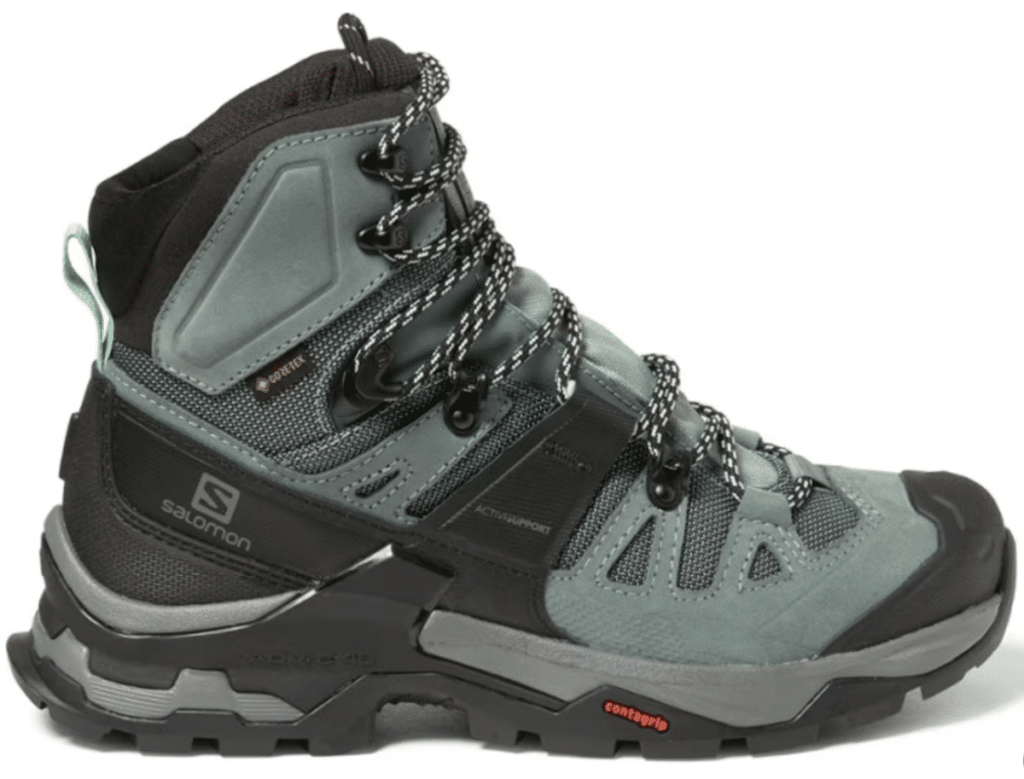
Salomon Quest 4 GORE-TEX Hiking Boots
⭐4.2/5 stars out of 85 reviews
The Salomon Quest 4 Gore-Tex Hiking Boots effortlessly combine comfort, durability, and practicality, making them my go-to for any hiking adventure. The standout Gore-Tex technology ensures top-notch waterproofing for those rainy trails or stream crossings, while the Advanced Chassis™ technology and EnergyCell midsoles provide exceptional support and cushioning, reducing fatigue on those long-distance hikes.
I personally appreciate the Contagrip® TD outsoles for their excellent traction on slippery terrains, adding a sense of confidence to every step. Plus, their sleek design means you don’t have to compromise on style while conquering the trails. In short, for functionality and aesthetics, these boots are a top pick.
✅ Pros: Lightweight, durable, waterproof, ankle support.
❌ Cons: Bad for sweaty feet, takes a while to break in.
💲 Price: $230 at REI
⭐BUY SALOMON QUEST 4 GORE-TEX HIKING BOOTS HERE⭐
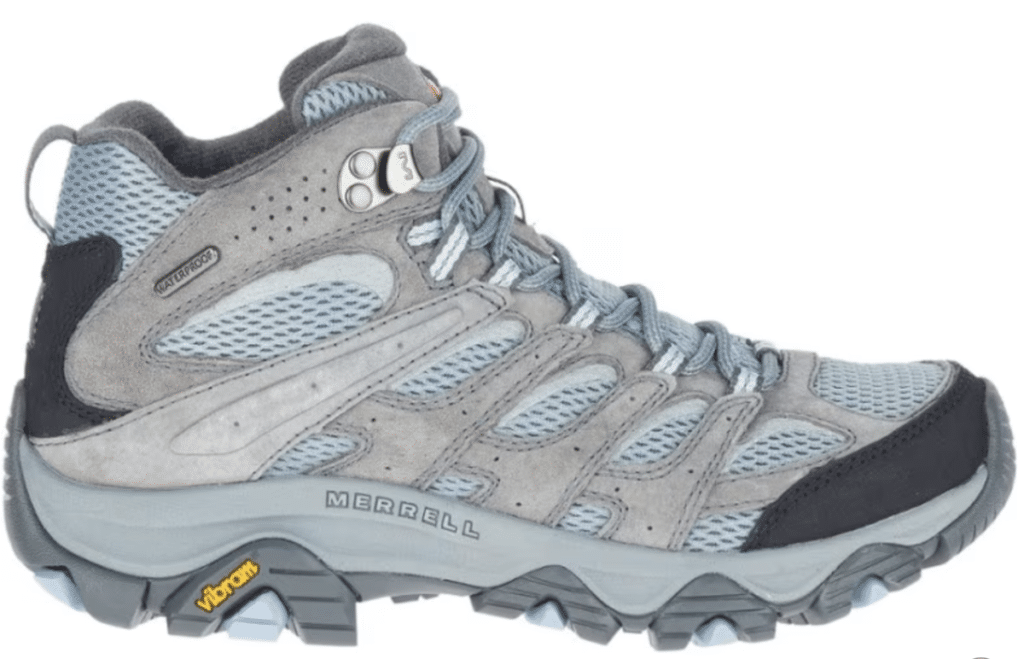
Merrell Moab 3 Mid Waterproof Hiking Boots
⭐4.6/5 stars out of 240 reviews
The Merrell Moab 3 Mid Waterproof Hiking Boots combine robustness, comfort, and practicality, making them an excellent choice for any hiking endeavor. Their signature M Select™ DRY technology offers reliable waterproofing, meaning you can tackle wet trails or creek crossings without worrying about soggy feet. The boots’ Kinetic Fit™ BASE removable contoured insoles and EVA foam midsoles provide outstanding support and cushioning, which I’ve found to be a game-changer on lengthy hikes.
I’m personally fond of the Vibram® TC5+ rubber outsoles that offer remarkable traction, giving you a confident grip on diverse terrains. Not to mention, their stylish design ensures you’ll look as good as you feel on the trail. In summary, the Merrell Moab 3 Mid Waterproof Hiking Boots strike an impressive balance between functionality and style, making them a standout choice for any hiker.
✅ Pros: Lightweight, waterproof, cushioned.
❌ Cons: Lack of ankle support, can occasionally rub.
💲 Price: $145 at REI
⭐BUY MERELL MOAB 3 MID WATERPROOF HIKING BOOTS HERE⭐
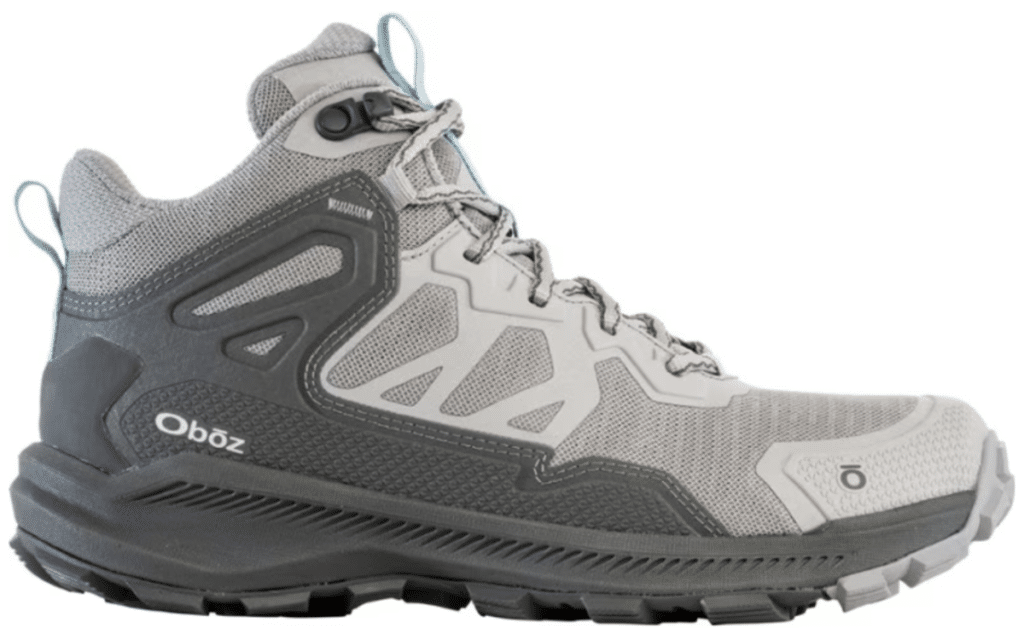
Oboz Katabatic Mid Hiking Boots
⭐5/5 stars out of 29 reviews
The Oboz Katabatic Mid Hiking Boots expertly blend resilience, comfort, and practicality, making them an exceptional choice for any hiking escapade. Their B-DRY waterproof membrane keeps your feet dry and comfortable, allowing you to fearlessly tackle damp trails or stream crossings. I’ve been particularly impressed by the boots’ O FIT Insole™ and the dual-density EVA midsoles, which deliver remarkable support and cushioning, making a significant difference on those extended hikes.
The Granite Peak outsoles, featuring multidirectional lugs, provide excellent traction, instilling confidence as you navigate a variety of terrains. Moreover, their eye-catching design ensures you look great while exploring the great outdoors.
✅ Pros: Lightweight, heel support, breathable.
❌ Cons: Not super durable, no wide sizes, not waterproof.
💲 Price: $160 at REI
⭐OBOZ KATABATIC MID HIKING BOOTS HERE⭐
Recommended hiking boots for men
Because men tend to have additional weight, they might have some other considerations to think about when choosing boots. Here are some of my recommended options we found worked for my husband Daniel and he loved.
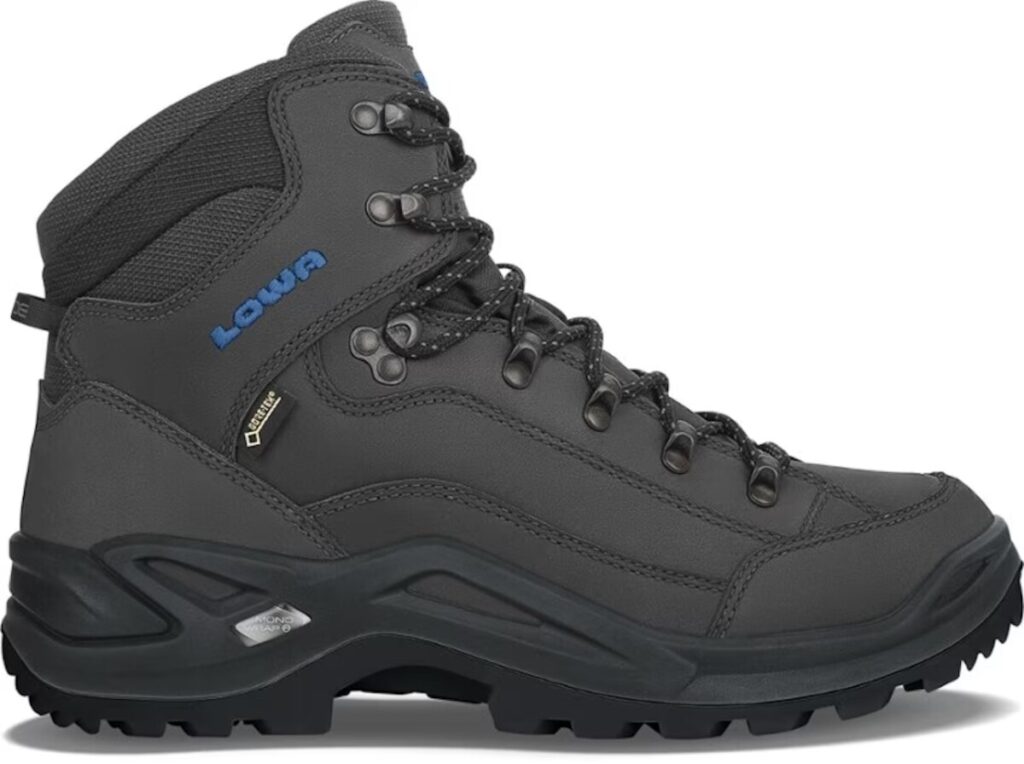
Lowa Renegade GTX Mid Hiking Boots
⭐4.2/5 stars out of 1,024 reviews
The Lowa Renegade GTX Mid Hiking Boots masterfully marry toughness, comfort, and practicality, securing their place as a prime pick for any hiking expedition. Their acclaimed Gore-Tex® waterproof lining ensures your feet stay dry and cozy, regardless of whether you’re braving wet trails or crossing streams.
I have been consistently impressed by the boots’ climate-control footbed and DuraPU® midsoles, which offer exceptional support and cushioning, making them an ally on long-distance hikes. I also value the Vibram® Evo outsoles that deliver excellent traction, fostering confidence as you traverse a range of terrains.
✅ Pros: Lightweight, waterproof, ankle support, padded tongue.
❌ Cons: No warranty, takes a while to break in.
💲 Price: $255 at REI
⭐BUY LOWA RENEGADE GTX MID HIKING BOOTS HERE⭐

Oboz Sawtooth X Mid Waterproof Hiking Boots
⭐4.4/5 stars out of 84 reviews
The Oboz Sawtooth X Mid Waterproof Hiking Boots skillfully blend durability, comfort, and versatility, making them a top-notch selection for any hiking adventure. Their innovative B-DRY waterproof system guarantees dry and comfortable feet, even when you’re venturing across damp trails or navigating stream crossings. I am particularly fond of the boots’ O FIT Insole™ and the dual-density EVA midsoles, which provide unparalleled support and cushioning, a true blessing on those lengthy hikes.
The Sawtooth outsoles, with their deep lugs, offer superb traction, giving you a confident footing across a range of terrains. To top it off, their rugged yet stylish design ensures you’re trail-ready in style. In summary, the Oboz Sawtooth X Mid Waterproof Hiking Boots provide an impressive combination of functionality and aesthetics, making them a must-have for any avid hiker.
✅ Pros: Lightweight, excellent treading system, breathable.
❌ Cons: Sizing, stiff.
💲 Price: $175 at REI
⭐BUY OBOZ SAWTOOTH X MID WATERPROOF HIKING BOOTS HERE⭐
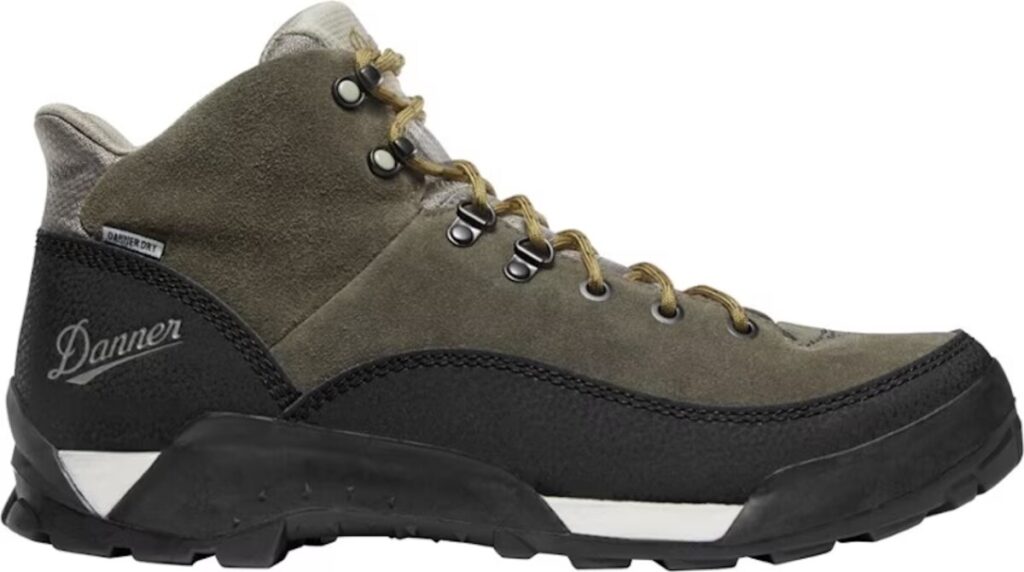
Danner Panorama Waterproof Mid Hiking Boots
⭐4.5/5 stars out of 21 reviews
The Danner Panorama Waterproof Mid Hiking Boots seamlessly blend durability, comfort, and functionality, making them an outstanding choice for any hiking adventure. Their unique Danner® Dry waterproof technology keeps your feet dry and cozy, no matter if you’re trekking across damp trails or fording streams. I’ve personally been wowed by the boots’ OrthoLite® footbed and EVA midsoles, which deliver exceptional support and cushioning, a true asset for those long-distance hikes.
The Danner® Panorama outsoles provide excellent traction, ensuring a confident stride across a variety of terrains. Additionally, their stylish, retro-inspired design ensures you’ll look the part while conquering the wilderness.
✅ Pros: Deep lugs, low profile design, breathable.
❌ Cons: Complicated lacing system, stiff midsoles.
💲 Price: $159.95 at REI
⭐BUY DANNER PANORAMA WATERPROOF MID HIKING BOOTS HERE⭐
Conclusion: how to choose hiking boots
Choosing the right hiking boots can make all the difference in your outdoor adventures. By considering factors like fit, comfort, support, and the type of terrain you’ll be hiking on, you can find the perfect pair for your needs.
Don’t forget to invest in quality hiking socks, break in your boots, and practice proper a lacing system to ensure a comfortable and enjoyable hiking experience.
Have any questions about choosing the right boots for you? Let me know in the comments!
Like this post? Save it for later!


Want more information on outdoor gear? Check out these articles:


