
How to Choose a Climbing Helmet + FAQs
This guide contains affiliate links to trusted partners.
When exploring the outdoors, I encourage you to follow Leave No Trace Principles and be respectful of where you are so we can preserve these spaces for future generations. ♥️
Not sure what type of climbing helmet you should choose for your next day at the crag?
When you are first getting into climbing, you might know that you will need a helmet when you get outside, but you might not know that there are several types. I had no idea that you might need a different helmet depending on what type of climbing you are doing and what conditions you are likely to face. I learned a lot when I started looking into what I needed!
We’ll go over the different helmets you need for climbing and which purposes they are best used for. There is also a big price difference between the different types of helmets, so you’ll want to make sure to keep that in mind when it comes to your budget too!
Even if you only plan on belaying, you’ll also need a helmet, so make sure that your belay partner is protected even when they are on the ground too!
In summary: This article covers the types of climbing helmets you can find, as well as which helmet you might want for certain types of climbing. It also includes some FAQs to help you pick the right helmet for you.
Quick tip: For your first few times climbing, I recommend going with a guide. They’ll have a helmet you can use and you can ask some questions about which might be right for you as you progress.
Types of climbing helmets
When I first started climbing, understanding helmet types was crucial for my safety and so I knew what to invest in! There are two main categories: hardshell and shelled foam helmets. Each has its own benefits depending on your climbing style and needs. I’ve used both types over the years, and they each serve different purposes.

Hardshell helmets
These are the traditional workhorses of climbing helmets. Think of them as having a hard outer shell similar to a construction helmet, with a webbing suspension system inside. They’re especially great for ice climbing since they’re super durable and can take multiple impacts. They’re generally more affordable and last longer, though they tend to be heavier and less ventilated than their foam counterparts.
Recommended hardshell helmet: Petzel Borea/Boreo (women/men)

Shelled foam helmets
This is what I primarily use for sport climbing. They’re lighter weight and offer better ventilation than hardshell models, which is fantastic during those hot summer climbing days. The foam construction absorbs impact really well, but they can only take one significant hit before needing replacement. Most high-end climbing helmets now use this construction style since climbers generally prefer the lighter weight.
Recommended shelled foam helmet: Black Diamond Vapor
Choosing a helmet by type of climbing
Your climbing style should heavily influence your helmet choice. I switch between different helmets depending on what type of climbing I’m planning for the day.
Sport climbing
For sport climbing, I prefer a lightweight shelled foam helmet. Since most sport climbing involves single-pitch routes where rock fall is less common, the main protection you need is against impacts from falls. The extra ventilation and lighter weight of foam helmets make them perfect for those long days at the crag.
Ice climbing
Ice climbing absolutely demands a durable helmet! I always opt for hardshell models when ice climbing since falling ice is a constant hazard. The harder outer shell is crucial for deflecting ice chunks, and the durability means they can take multiple small impacts throughout the day.
Multi-pitch trad climbing and mountaineering
For multi-pitch routes, I look for helmets that balance durability with comfort since I’ll be wearing them all day. I usually go with a higher-end shelled foam helmet that offers good ventilation but still provides solid protection against rock fall. The lighter weight really matters when you’re up there for hours!
Belaying
Always wear your helmet while belaying! I’ve seen too many people skip this crucial safety step. I keep my helmet on whether I’m climbing or belaying–rocks can fall at any time, and you need protection just as much on the ground as on the wall. This is especially true at busy crags where multiple parties are climbing.
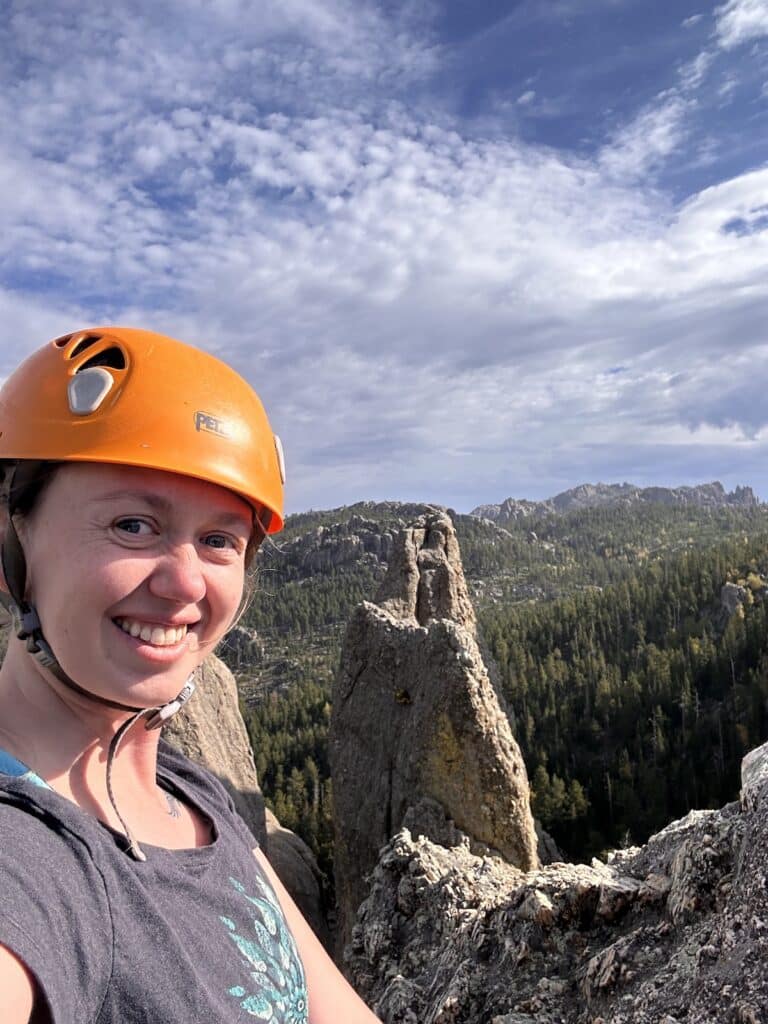
How to fit a climbing helmet
Getting the right fit is crucial for both comfort and safety. Here’s what I’ve learned when fitting a new helmet:
- Helmet should sit level on your head, and not tilted back
- Should feel snug but not tight
- No more than one finger width between your eyebrows and helmet
- Shouldn’t wobble when you shake your head
- Side straps should form a Y around your ears
- Chin strap should be snug but allow you to fully open your mouth
Join the community! Love the outdoors? Join my free Facebook community where we chat and share information about national parks, hiking, outdoor activities, and more! JOIN HERE!
How to choose a climbing helmet FAQs
Here are some common FAQs I get from beginning climbers looking to pick out their first helmet.
Conclusion
While it’s not the end of the world if you choose a hardshell helmet over a soft foam one (except if you are dealing with ice and rockfall), knowing the differences can make your climb much more comfortable. Along with the safety factor, there’s also the additional factor that certain types of helmets can be more expensive–you don’t want to end up with the wrong one and end up paying more!
Have any questions about choosing a climbing helmet? Let me know in the comments!
Climbing essentials
Recommended climbing shoes: La Sportiva Tarantulace
Recommended harness: Edelrid Jayne Harness
Recommended belay device: Petzl GRIGRI
Recommended chalk bag: Cotopaxi Halcon Chalk Bag


