
10 Tips for Camping with Your Dog for the First Time
This guide contains affiliate links to trusted partners.
When exploring the outdoors, I encourage you to follow Leave No Trace Principles and be respectful of where you are so we can preserve these spaces for future generations. ♥️
Looking to take your pup camping for the first time and need some tips?
When we were looking to get a dog, one of the first things we wanted to do with her was to take her on a camping trip. Daniel and I love camping, and we knew that we wanted to pitch a tent with our new best friend in tow. Once Gravy was old enough, we took her out to enjoy a night under the stars–and we were thrilled when she loved it!
However, camping with your dog does take some preparation. From knowing what to bring with you and campground rules, it does add an extra layer of planning. Plus, if it is your first time with your pet, they might be a little freaked out.
With these tips, you and your four-legged friend can handle a night outdoors with no problem. My camping adventures with Gravy are some of my absolute favorite adventures, and I’m so glad she loves sleeping in a tent as much as Daniel and I do!
In summary: This article covers information on how to camp with your pup for the first time and includes some tips to get you started!
Quick tip: Before you leave, read review on the campsite from other dog owners so you know if there’s anything you should be looking out for when you arrive!
1. Make sure your pet is vaccinated
Before taking Gravy on her first camping trip, we made sure she was up-to-date on all her vaccinations. This isn’t just about following rules–it’s about keeping your pup safe in the great outdoors. Wild animals can carry diseases, and your dog might encounter everything from raccoons to other dogs at the campground.
Our vet also recommended making sure Gravy had flea and tick prevention since she loves to explore the underbrush and get into all sorts of stuff. It’s also a good idea to get your dog microchipped if they aren’t already, just in case they get spooked and run off. We also keep a photo of Gravy’s vaccination records on our phones–some campgrounds actually require proof of rabies vaccination, and it’s better to be prepared than to have to cut your trip short.
2. Bring the essentials
When we first started camping with Gravy, I totally overpacked–but now we have our dog camping kit down to a science! Essential items include food (plus extra in case your trip runs long), collapsible water and food bowls, a leash and backup leash, poop bags, and their bed or sleeping pad.
Gravy has plenty of fur so doesn’t need her own sleeping bag for chilly nights, but we might pick one up if we have her shaved close. Don’t forget any medications your dog needs, and bring plenty of treats–camping is exciting but can be stressful for dogs, so positive reinforcement is key.
We also always pack Gravy’s favorite toy, a lobster she can chew on. It helps her feel more at home in the tent and gives her something familiar to focus on if she gets anxious.
3. Look up the rules and follow them
Every campground has different rules about dogs, and it’s super important to know them before you go. Some places require dogs to be on leash at all times (this is especially true in national parks), while others might have designated off-leash areas.
Having grown up near Glacier National Park, I know how important it is to follow these rules–they’re there to protect both wildlife and your pet. Remember that most national parks don’t allow dogs on trails, though national forests tend to be more dog-friendly. We always check if there are breed or size restrictions too.
Being a responsible dog owner means following these rules, even if you think your dog would be fine off-leash.

4. Practice ahead of time
Before taking Gravy on her first real camping trip, we did several practice runs in our backyard. This helped her get comfortable with the tent and all the new camping gear. We started by setting up the tent and letting her explore it during the day, then progressed to having her sleep in it overnight in our yard.
This really helped reduce her anxiety when we finally went camping for real! We also practiced basic commands like “leave it” and “come” when she was a puppy–these are super important when you’re in the wilderness. If your dog isn’t used to sleeping in close quarters with you, or gets anxious in new environments, these practice sessions can make a huge difference.
5. Be aware of wildlife
Growing up in Montana taught me a lot about wildlife safety, and it’s even more important when camping with a dog. Gravy is naturally curious, but we’ve worked hard on training her to stay close and come when called–essential skills when you might encounter anything from deer to bears.
We always carry bear spray and keep Gravy on leash in areas with known wildlife activity. Remember that your dog’s food can attract wildlife just like human food can. Be especially careful at dawn and dusk when animals are most active. Daniel and I always do a thorough check of our campsite’s surroundings before letting Gravy out of the tent in the morning.
6. Choose a campsite with dog-friendly things to do
When picking a campsite, we look for places that will be fun and safe for Gravy. We prefer sites near lakes where she can wade in (she’s a goldendoodle–she loves water!), or with hiking trails that allow dogs. Having enough space between campsites is important too–it helps avoid any issues with neighboring campers or their pets.
We also try to find spots with some shade since dogs can overheat quickly. Some of our favorite campgrounds even have designated dog areas where pups can play off-leash safely. Just remember that not every dog will be as friendly as yours might be!
Join the community! Love the outdoors? Join my free Facebook community where we chat and share information about national parks, hiking, outdoor activities, and more! JOIN HERE!
7. Bring a doggy first aid kit
After a few camping trips with Gravy, we put together a dedicated dog first aid kit. It includes bandages, tweezers for splinters or ticks, hydrogen peroxide, dog-safe antibiotic ointment, and an emergency blanket. We also keep styptic powder handy in case she tears a nail–which has never happened but can quickly ruin a camping trip if she did!
It’s also smart to have the contact information for the nearest emergency vet saved on your phone. I always pack Benadryl (after checking with our vet for the correct dosage) in case of any allergic reactions to plants or bug bites. Better safe than sorry when you’re miles from the nearest vet!
8. Store food properly
Just like with human food, proper storage of dog food is crucial when camping. We store Gravy’s food in an airtight container inside our bear-proof container or car (depending on where we’re camping). I prefer to bring pre-measured portions in ziplock bags rather than a whole bag of food for a short trip or backpacking adventure–it saves space and makes mealtime easier.
We also make sure to pick up any spilled kibble and never leave her food bowl out unattended. When we’re hiking, we carry her food and treats in our bear canister along with our own snacks. Remember that even empty dog food bags can attract wildlife, so they need to be stored properly too.
9. Know the signs if your dog needs to go home
It’s important to recognize when your dog isn’t enjoying the camping experience. When we first started camping with Gravy, we watched for signs of stress like excessive panting, pacing, whining, or refusing to eat. Some dogs might also show anxiety through destructive behavior or trying to escape the tent.
Not every dog will love camping right away–or at all–and that’s okay! We’ve learned to watch Gravy’s body language and energy levels closely–fortunately, she loved camping immediately. If your dog seems consistently stressed or uncomfortable, it might be better to cut the trip short and try again another time after more preparation.
10. Make sure you have the proper tent
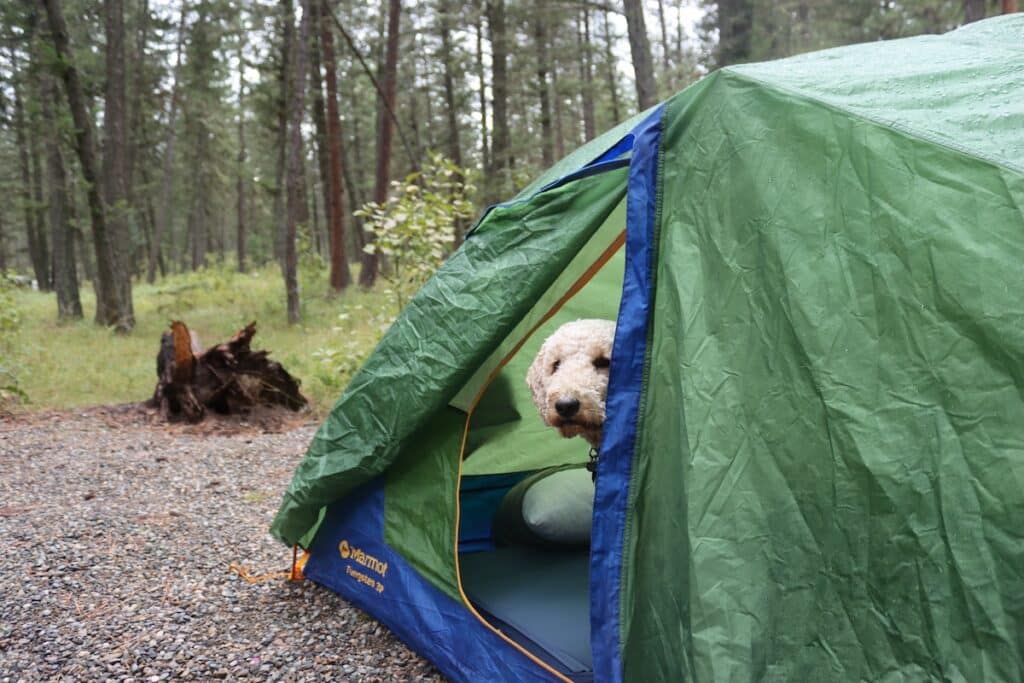
Having the right tent makes a huge difference when camping with a dog! We use our Marmot Tungsten 3P for camping with Gravy–even though it’s just Daniel and me, the extra space is perfect for having a dog along. Look for a tent with enough room for everyone to sleep comfortably and move around without stepping on paws.
Durable flooring is important too–we always bring an extra blanket or pad for Gravy to sleep on to protect the tent floor from her nails. Having two doors is super helpful for those middle-of-the-night bathroom breaks with your pup. And make sure there’s enough vestibule space to keep muddy paws and wet gear outside the sleeping area!
Conclusion
Camping with Gravy has been one of the most rewarding things we’ve done over the past few years. She makes our outdoor adventures all the more fun, and it only took a little time and effort to get her to a place where she was an old pro. If you feel like you want to take your dog along for the ride, it’s always worth trying–just remember to bring plenty of treats along to reward them!
Have any questions about camping with your dog? Let me know in the comments!


