
How to Hike to Alberta Falls + Tips & FAQs
This guide contains affiliate links to trusted partners.
When exploring the outdoors, I encourage you to follow Leave No Trace Principles and be respectful of where you are so we can preserve these spaces for future generations. ♥️
Looking to hike to Alberta Falls in Rocky Mountain National Park?
While I love to challenge myself hiking, every now and then it’s nice to take an easy stroll in nature and simply enjoy being outside–which is one of the things I like best about hiking in Rocky Mountain National Park. Alberta Falls is one of those trails where you can simply relax while hiking since it’s not too difficult and the pay off is more than worth the effort.
However, getting to the trailhead is actually the biggest challenge since Rocky Mountain has a reservation system for the area where the hike is located. Parking can also be a bit wild since the Bear Lake Road Corridor is home to some of the best hikes in the park, including Alberta Falls.
With a bit of planning, you can find a spot that will allow you to be close to the trailhead so you can see Alberta Falls in all of their glory. If you want more, you also have the option to take on some of the other connecting trails in the area, as well!
In summary: This guide covers what you need to know in order to hike to Alberta Falls, including hiking stats, information on reservations, and more.
Quick tip: Early riser? You can skip the reservation system altogether by entering the park before 5:00 am–you’re also more likely to find a parking place!
Quick stats
Distance: 1.7 miles
Difficulty: Easy
Elevation gain: 236 feet
Time on trail: 1 hour
How to hike to Alberta Falls
Alberta Falls is one of my favorite waterfalls in Rocky Mountain National Park, and it’s the perfect hike for anyone wanting dramatic mountain scenery without committing to a full day of serious elevation gain.
Located in the Bear Lake Road Corridor, this 1.7-mile round-trip hike rewards you with a beautiful 30-foot waterfall cascading over moss-covered rocks, surrounded by coniferous forest and mountain views. The hike gains about 200 feet of elevation, making it moderate and accessible for most fitness levels and families.
Here’s something really important to know before you go: the Bear Lake Road Corridor now requires timed entry reservations during peak season (typically May through October). This is a recent change implemented to manage the overwhelming crowds that were causing parking nightmares and trail congestion.
You’ll need to reserve your entry time in advance through Recreation.gov. During peak summer months, these reservations fill up quickly—often weeks in advance—so plan ahead and book early. Off-season visits don’t require reservations, but the road can close due to snow during winter months.
Need help planning your national park trip?

I offer custom national park itinerary planning as a service to help you make the most of your adventures! These itineraries cover everything from where to stay, eat, what to do, and more!
The trailhead for Alberta Falls starts at the Glacier Gorge Trailhead, which sits at the end of Bear Lake Road. If you’re driving during reservation season, you must have a valid timed entry to access the road. You also have the option of parking and starting the hike at Bear Lake, which makes it longer and more challenging (3.7 miles and around 700 feet of elevation). Finding a spot here can be challenging even with reservations, so arrive close to your reservation time rather than showing up significantly early.
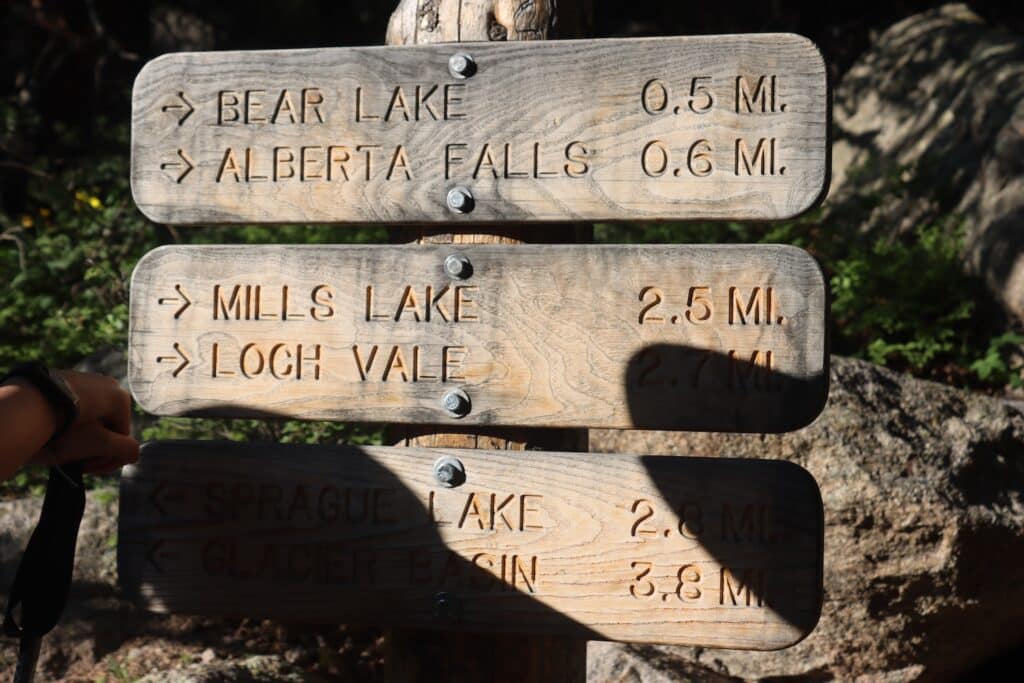
The parking situation in this corridor is genuinely one of the most congested in the park, so the reservation system actually helps by spreading out visitors throughout the day. You also have the option of taking the Rocky Mountain National Park shuttle, which I highly recommend if you have this hike on your bucket list of things to do in the park.
The trail itself is well-maintained and clearly marked, following Glacier Creek uphill through beautiful spruce-fir forest. The beginning of the hike is relatively flat as you walk along the creek, which is absolutely gorgeous with the water cascading over rocks. As you gain elevation, the forest opens slightly and you start getting mountain views. The final push to Alberta Falls involves steeper climbing, but nothing too technical or difficult.

When you reach Alberta Falls, you’ll see why the effort was worth it. The waterfall plunges over a moss-covered cliff face with a gorgeous emerald pool at the base. The rocks surrounding the falls are slippery due to mist and spray, so be careful if you want to get closer for photos. The area around the falls is usually less crowded than the initial sections of trail because many hikers turn back earlier or choose different routes.
I love this hike because it offers mountain waterfall scenery without the massive commitment of longer Rocky Mountain hikes. You can easily do it as a morning adventure and still have afternoon time for other activities in the park. The Bear Lake Road Corridor has multiple trailheads, so you can explore different trails like Sky Pond across multiple visits. Just remember those reservations—showing up without one during peak season means you won’t be able to access the road at all.
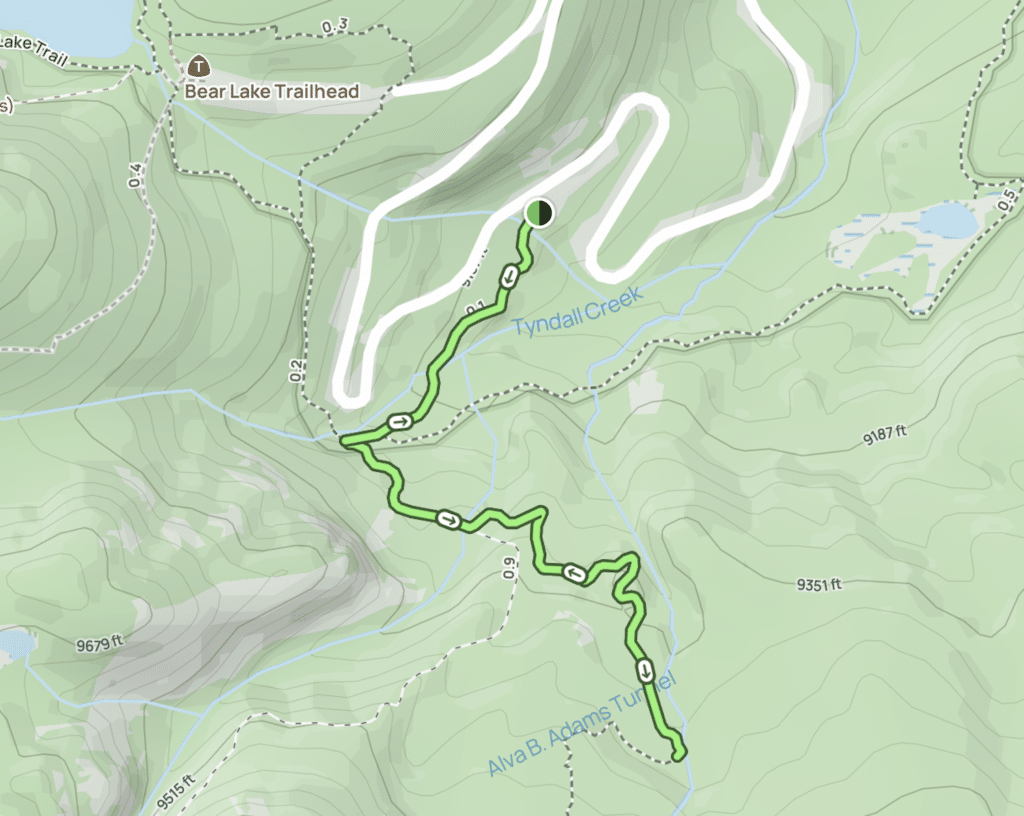
Map of the Alberta Falls hike
Tips for hiking to Alberta Falls
Here are some tips I found helpful while hiking to Alberta Falls.
- Book your Bear Lake Road Corridor reservation weeks in advance: During peak season (May-October), these reservations fill up quickly—sometimes 4-6 weeks ahead. Check Recreation.gov frequently for availability and don’t wait until the last minute. Without a reservation, you won’t be able to access the road at all.
- Arrive close to your reservation time: Don’t show up an hour early expecting easy parking. The lots are tiny and fill up fast. Timing your arrival to enter the gate right on time will help to ensure you get a parking spot without circling endlessly.
- Wear sturdy hiking boots with good grip: The trail involves some rocky sections and the area around Alberta Falls is incredibly slippery due to mist and spray from the waterfall. Good traction on your boots is essential to avoid slipping on wet rocks.
- Bring more water than you think you need: At elevation, you’ll get thirsty faster than expected, and there’s nowhere to refill on the trail. I always pack at least 2-3 liters for this hike despite it being relatively short.
- Start early to avoid afternoon crowds: The Bear Lake area gets absolutely packed by mid-morning, especially on weekends. An early reservation (or getting in early in the morning before they are required) means you’ll have more space on the trail and better parking availability.
Alberta Falls FAQs
Here are some commonly-asked questions I get from visitors about Alberta Falls.
Conclusion
Alberta Falls offers stunning waterfall scenery in an accessible hike. Remember to book your Bear Lake Road Corridor reservation in advance during peak season. This moderate hike is perfect for experiencing Rocky Mountain beauty without a full-day commitment.
Have any questions about hiking to Alberta Falls? Let me know in the comments!
National Park essentials
You’ll need to enter: National parks pass 🎟️
Document your trip: National parks journal ✏️
Wear your national parks love: National parks shirts 👕


