
Hiking Etiquette 101: What to Know + FAQs
This guide contains affiliate links to trusted partners.
When exploring the outdoors, I encourage you to follow Leave No Trace Principles and be respectful of where you are so we can preserve these spaces for future generations. ♥️
Confused on what you need to know when it comes to etiquette on the trail?
Have you ever wondered who should pass who on the trail? What about what to do when nature calls? These are all things I had to learn even as someone who grew up hiking, and as more people tend to hit the trails, following the rules while hiking is more important than ever. But it is a bit of a learning curve!
While some of these might seem unnecessary, the truth is that these rules are there for a reason in order to preserve our natural spaces for others. And, of course, being kind to others is always a good idea whether you are on the trail or off.
We’ll go over some of the main things you need to know about hiking etiquette and how you can remember some of the rules for your future adventures outdoors.
In summary: This article will cover the basics when it comes to hiking etiquette and what you need to know when it comes to being polite on the trail and preserving it for the future.
Quick tip: You’ll want to make sure you have all the hiking essentials you need so you can navigate the trail with confidence–less time thinking about gear and more time enjoying your hike!
Be respectful of nature
Leave No Trace principles are essential on every trail. Pack out everything you bring in–and yes, that means apple cores and banana peels too, since they’re not native to most ecosystems. Stay on designated trails to prevent erosion and protect fragile plant life.
Never pick flowers or take “souvenirs” from the trail. When Daniel and I hike, we bring a small trash bag for any litter we find. Keep your voice down to avoid disturbing wildlife. Remember, we’re visitors in their home.

Know who has the right of way
Trail etiquette can be confusing, but here’s what I’ve learned over years of hiking: uphill hikers have the right of way. While some might stop to catch their breath and wave you through, always yield to those climbing up. It’s harder for them to break their momentum.
If you’re hiking in a group like I often do with Daniel and Gravy, move into single file when passing others. On narrow trails, the downhill hiker should step to the downhill side for safety.
Hike quietly
While I love chatting with Daniel on the trail, we always keep our voices low, though the rules are a little bit different hiking in bear country. Nature sounds are part of the wilderness experience–nobody wants to hear your music or phone conversations! If you need to take a call, step off the trail and keep it brief. Early morning hours are especially important for staying quiet since many hikers are out for solitude and wildlife viewing.
Know who yields (horses and bikers)
Horses always get the right of way–move to the downhill side of the trail and stay quiet until they pass. When mountain bikes and hikers meet, bikes should yield to hikers, though I often step aside anyway since it’s easier for me to start walking again than for them to regain momentum.
If you are mountain biking trails, bikers might not always slow down, so oftentimes it’s better to just step to the side. When Gravy and I encounter horses, we move well off the trail and make sure she stays calm and quiet.
Stay on trail
This is one of my biggest pet peeves! Cutting switchbacks or creating “social trails” causes erosion and damages fragile vegetation. Having grown up in Montana and how busy it has become over the past few years, I’ve seen how off-trail hiking can permanently scar the landscape. Even if you see others doing it, stick to the designated trail. If you need to step off briefly to let others pass, try to find a durable surface like rock or bare ground.
Join the community! Love the outdoors? Join my free Facebook community where we chat and share information about national parks, hiking, outdoor activities, and more! JOIN HERE!
Don’t leave cairns
I know those little rock stacks look cute on Instagram, but please don’t build them! Official cairns are trail markers that help hikers navigate, especially above treeline. Adding random cairns can confuse hikers and lead them off trail. Plus, moving rocks disturbs small wildlife habitats and causes erosion.
Know the rules of hiking with a dog
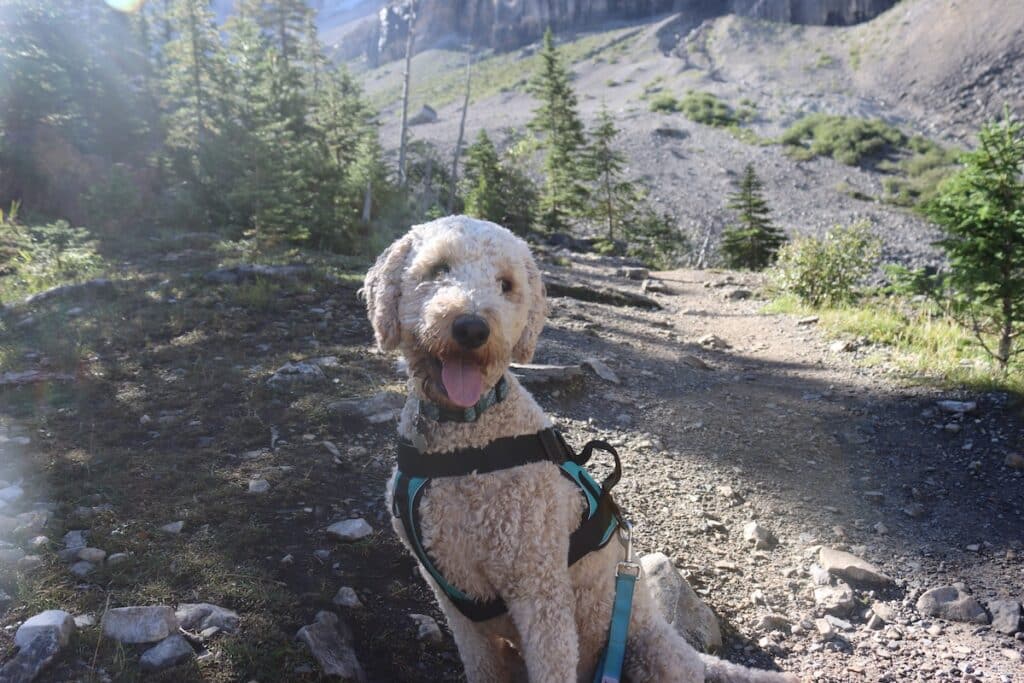
As someone who hikes regularly with Gravy, proper dog etiquette is crucial. Always keep your dog leashed unless you’re in a designated off-leash area. Pick up and pack out their waste–no excuses! Your dog should be well-trained enough to not jump on other hikers or wildlife. When passing other hikers or dogs, keep your pup close and under control. Not everyone is comfortable around dogs, even uber-friendly ones like Gravy.
Know the rules for relieving yourself
When nature calls in nature, follow Leave No Trace principles! Find a spot at least 200 feet (about 70 steps) from water sources, trails, and campsites. Dig a cathole 6-8 inches deep for solid waste, and pack out your toilet paper–I always carry a small ziplock bag for this purpose. You can also bring a wag bag with you if you would prefer carrying your waste out with you.
For peeing, try to find a rocky area or hard ground where the soil won’t be impacted and away from any water sources.
Be kind to others
The trail belongs to everyone, regardless of their experience level, background, or hiking speed. Whether someone’s tackling their first hike or their hundredth, they deserve to feel welcome and respected.
I’ve seen too many experienced hikers act dismissively toward beginners–that’s not what our hiking community should be about. Share a friendly greeting, offer help if someone seems lost, and be patient with new hikers who might be learning trail etiquette. We were all beginners once!
Hiking etiquette FAQs
Here are some common FAQs I get about hiking etiquette.
Conclusion
Once you have an idea of what hiking etiquette is and how to follow the rules on the trail, it’s actually pretty easy to remember everything. It also makes the experience much better for everyone involved too–no one wants to hear loud music when they’re trying to enjoy the trail! It also helps to keep our natural spaces preserved for other hikers in the future–which might be the best part!
Have any questions about hiking etiquette? Let me know in the comments!


