
How to Choose Climbing Shoes as a Beginner + Tips & FAQs
This guide contains affiliate links to trusted partners.
Picking out your first pair of climbing shoes?
When exploring the outdoors, I encourage you to follow Leave No Trace Principles and be respectful of where you are so we can preserve these spaces for future generations. ♥️
Getting into climbing was one of the most exciting and things I’ve done over the past few years. I went to a bouldering gym in Whitefish, Montana and I found that I was hooked! Since then, whenever I am traveling, I’m always looking for places I can attempt a route or two, which means I have to have a good pair of climbing shoes with me wherever I go!
To be honest, I felt incredibly overwhelmed heading to the sporting goods store to pick out my shoes. I knew absolutely nothing at the time, so I was going off what one of my good friends told me to do when I got there. How hard could be it be to find a pair?
The truth is that there is a lot that goes into picking out a pair of climbing shoes, and there is plenty of variety, so what works for one person probably won’t work for the next. Over the past few years, I’ve come up with a system to decide what my needs are in that moment and where I am climbing–inside or outside, it does make a difference!
In summary: This guide covers the different types of climbing shoes, how to choose a pair that fits your needs, tips for picking them out, and some frequently-asked questions about deciding on a pair.
Quick tip: Jump to the section on “How to choose your pair of climbing shoes” if you want to choose your pair right away.
Types of climbing shoes
The first thing I like to do when deciding what shoes would be right for me is how I am primarily going to use them. If I am looking for a pair to take with me to the gym, I pick a shoe that is designed to be softer. For outdoor climbs, I need something stronger. Knowing which type can help me pick out a pair that makes sense for my needs.
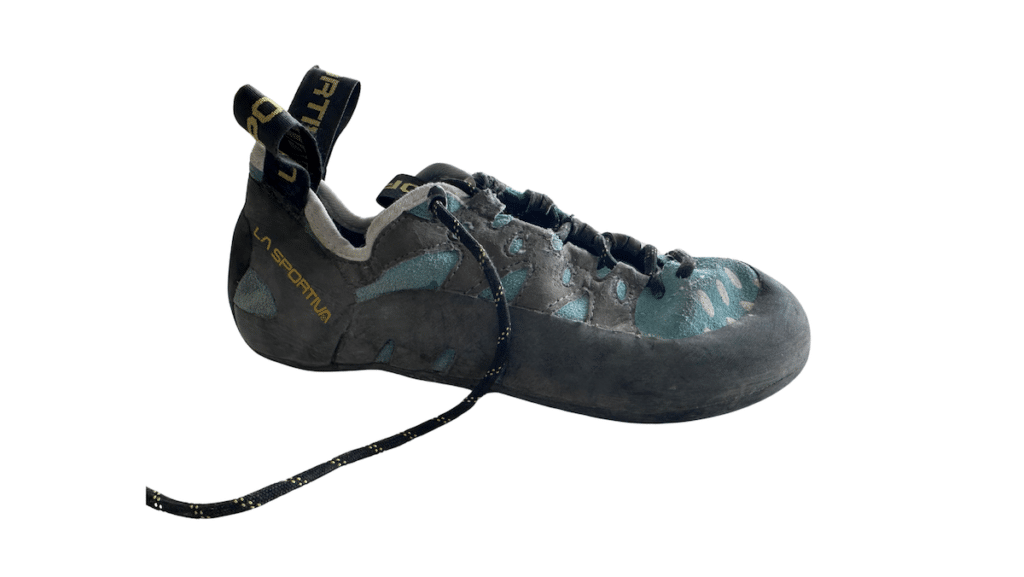
Neutral
Neutral climbing shoes are the ones I turn to when I’m headed out to the crag. Because they tend to have a thicker sole and are stiffer, I’ve found that they handle better on actual rock. When I’m climbing a full day, they also tend to provide a bit more support and because the sole isn’t as curved, they are more comfortable. These are typically what I would recommend for beginners headed to the gym too.
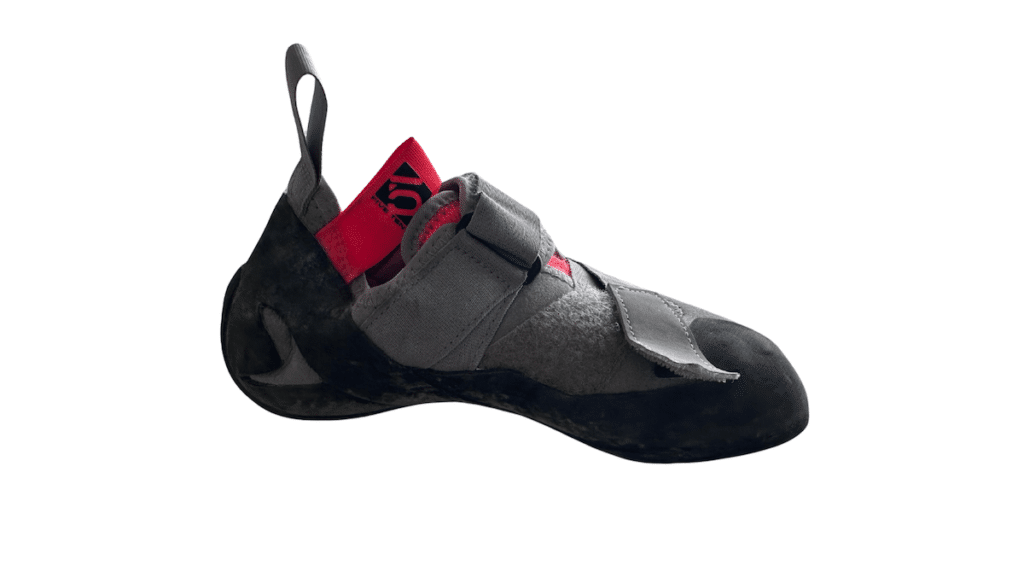
Moderate
Moderate climbing shoes have a bit more bend in the sole than neutral climbing shoes. These are the shoes I typically wear at a gym session, since they give me a little more freedom to feel the rock. Because they are more pliant, you’ll have an easier time smearing and performing more technical movements.
That being said, they do wear out faster since the rubber in the sole isn’t as thick, and since they are tighter, they wouldn’t be ideal for a multi-pitch climb outdoors. But I have found as I have gotten more advanced, I like having a softer shoe in the gym so I can be more precise in my movements.
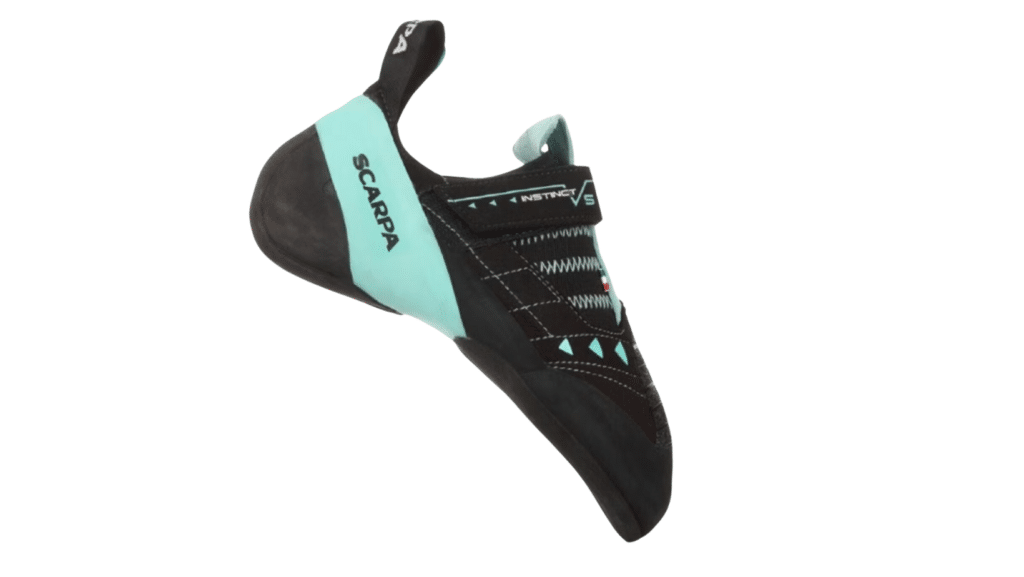
Aggressive
Planning on taking on an overhang pitch or need a little extra power? An aggressive pair of climbing shoes is designed for just that–as well as handling steep routes. This is why they are also useful for tough routes at the gym depending on your skill level.
You might also find more material in the heel, which provides support for technical movements like heel hooks. While this can be great in the short term, it means that it can be quite uncomfortable during a long day outside. Everyone has their own preferences, but I recommend aggressive shoes for single pitches or overhangs while bouldering.
Quick tip: If in doubt, choose a neutral pair of shoes–they’ll be more comfortable for you, and if you need more aggressive shoes, you can always pick them up later!
How to choose your pair of climbing shoes
Now that you have an idea of the types of climbing shoes available, you’ll need to think about sizing, price, material, and the longevity of your shoe. You can read all about these factors that might go into making your decision below, but I thought I would go into what you need to consider when ordering or purchasing your pair from a store for the first time.
First, I highly recommend visiting a sporting goods store for the first time when purchasing your shoes. Gear junkies can point you in the right direction if you have any hesitations, and just because you know your street shoe size, that doesn’t mean it will correspond with your climbing shoe size. In fact, you usually want to size down one half-size when purchasing climbing shoes, since they tend to stretch after some use–especially if you are choosing a neutral shoe.
Try your shoe on–it should feel snug and give you a slight curl in the toe, but it shouldn’t be so tight that it’s uncomfortable to walk or stand. It should also be fairly easy to slip on and if you are struggling to get it on your foot, that means it is too tight.
Many stores will let you take a pair to the gym and try them out, and some gyms even have a shop where you can attempt a route or two with them and see how they feel. You might want to test out a few different shoes and sizes until you find a pair that feel right to you.
If you are ordering them online, I would recommend doing the same. Pick out a few different options and sizes, and then return the ones that don’t work. It’s an upfront expense, but that way you’ll save a lot of time and money down the line if you are replacing them after a few uses.
Join the community! Love the outdoors? Join my free Facebook community where we chat and share information about national parks, hiking, outdoor activities, and more! JOIN HERE!
Other factors to keep in mind when choosing your climbing shoes
This should be enough to get your first pair of climbing shoes. While it can be important to know a bit more when you become an intermediate climber, these basics should help you choose a solid option that will set a foundation for your climbing career.
Once you become a little more advanced, I recommend you learn a little more about materials and design since this can assist you with harder routes. From the 5.6 to 5.8 (top rope) range or V0 to V1 (bouldering), you should be okay to go, but as a head’s up, here are some other factors you might want to be aware of when choosing your next pair.
- Closures: How you tighten your shoes. Typically comes as lace-up, velcro, or slip-on.
- Materials: Synthetic, lined, or leather.
- Last: The model on which the shoe is designed.
- Sole symmetry: How the shoe’s sole is designed to make contact with the rock or climbing wall.
- Sole thickness: How much rubber material makes up the sole and is between your foot and the rock or climbing wall.
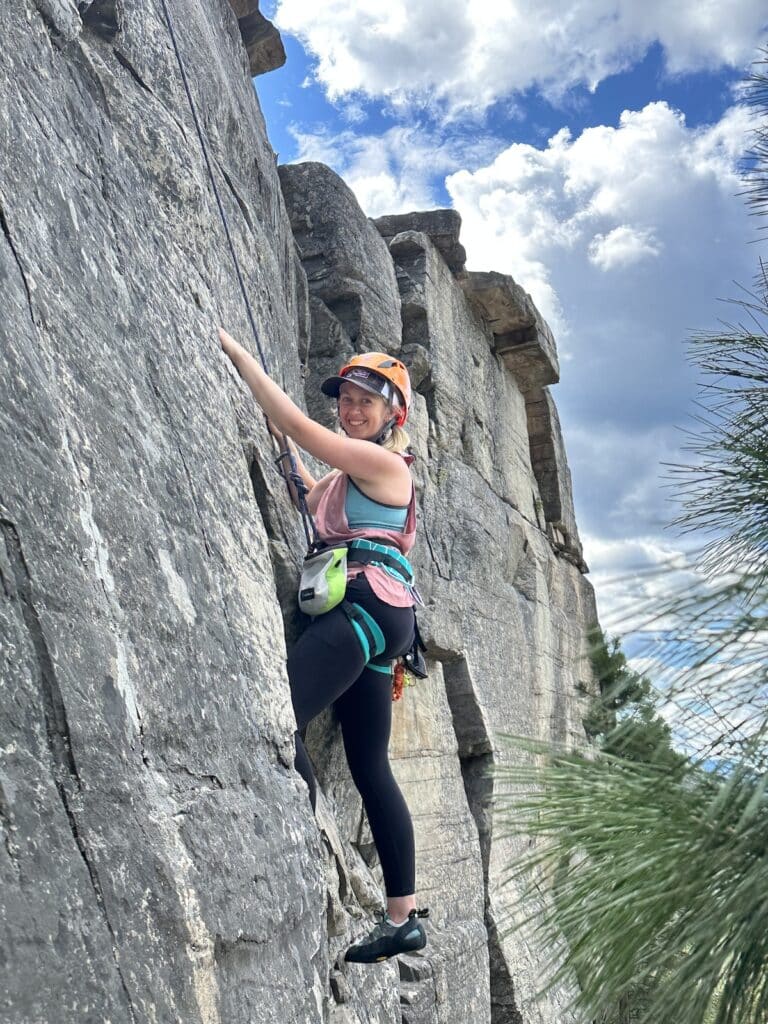
A note on climbing outdoors versus indoors
This advice should cover you for both indoor and outdoor climbing, but I wanted to share a quick note on what differences you might want to keep in mind if you are primarily climbing in one over the other. This is why I usually have two types of shoes–one for long days outside (neutral) and one for short pitches indoors and bouldering (moderate).
One thing I will mention is that you can’t go wrong with a neutral pair of shoes in the beginning. They are versatile, so you can wear them outdoors where you might need some more support and a thicker sole for crack climbing. Since they are designed with long climbs in mind, they tend to be more comfortable too.
When you are inside at a gym, you are often trying to perform some more technical moves. This is where a softer shoe can be helpful. However, neutral shoes can also be perfect for beginners with the additional support and because you’re just learning foot placement.
A note on women’s climbing shoes
Women’s climbing shoes tend to be designed differently–you honestly won’t find a ton of aggressive options since they have a longer toe bed. If you are a guy reading this, don’t rule out women’s shoes for yourself! As a beginner, they are often a great choice since they give you a bit more room. Many men have switched over to female models because of this reason, so you might want to try them on too when picking out your shoes.

Tips for choosing climbing shoes
Here are some tips I’ve found helpful when choosing my climbing shoes and that might be helpful for you too!
- Climbing shoe sizes are not all the same: You might wear a 6 in La Sportiva, and a 6.5 in Scarpa. This is why ordering online can be a bit tricky since there is no universal sizing method. Try a bunch on and see how they feel.
- Consider synthetic in the beginning: If you are planning at mostly climbing at the gym and you want minimal stretch, a synthetic shoe is the way to go as a beginner. They will last longer and you don’t have to worry about breaking them in.
- Don’t pay too much, but don’t cheap out: The most expensive climbing shoes on the market won’t make you a better climber if you don’t know the basics, and the cheapest shoes won’t support you on journey. Aim for mid-range so you have support but you still have cash in your wallet.
Choosing climbing shoes FAQs
Here are some frequently-asked questions I often get when I hear from others looking into getting into climbing for the first time and they are choosing their shoes.
Conclusion
Choosing your first pair of climbing shoes can feel super exciting–it’s the first step toward beginning your climbing career! That being said, it can feel very overwhelming when you step into a store looking for your ideal pair. I hope this guide has clarified some things and has helped you figure out what you should be considering when buy your first pair.
Have any questions about choosing your first pair of climbing shoes? Let me know in the comments!
Climbing essentials
Recommended climbing shoes: La Sportiva Tarantulace
Recommended harness: Edelrid Jayne Harness
Recommended belay device: Petzl GRIGRI
Recommended chalk bag: Cotopaxi Halcon Chalk Bag


