
How to Choose a Mountaineering Jacket: What You Need to Know
This guide contains affiliate links to trusted partners.
When exploring the outdoors, I encourage you to follow Leave No Trace Principles and be respectful of where you are so we can preserve these spaces for future generations. ♥️
Wondering what you should be looking for when choosing a mountaineering jacket for your adventures?
Getting into the world of mountaineering required learning a whole bunch of new things–especially when it came to finding what gear I needed! It can be really overwhelming, and I definitely felt in over my head when choosing which items I would need to climb Mount Hood.
One of the items I wanted to make sure I got right was my jacket. The truth is, depending on what type of mountain you are climbing and what the expected conditions are, you might need a few different types of jackets in your wheelhouse. This can make the process of choosing even more complicated.
In this article, I’ll break down what you need to know when it comes to choosing the right mountaineering jacket for which summit you plan on bagging, as well as any other concerns you might have when picking out one of the most crucial items you’ll need for your adventure.
In summary: We’ll take a look at the key components of choosing a mountaineering jacket, as well as what you need to know before you pull the trigger and buy one.
Quick tip: I always like to size up my puffy jackets so they provide more insulation on the mountain–it leaves a little extra room for airflow!
Softshell or hardshell
One of the first things that you’ll want to keep in mind when making a choice in a jacket is whether you will be using a softshell jacket or a hardshell. You might only use one or the other, or you might even use both depending on what altitude you expect to be in, the weather, and if you will be frequently stopping.
A softshell is usually what you wear in warmer temperatures or underneath your hardshell if you need an extra layer to keep yourself warm. You can use a softshell for a number of purposes–not just mountaineering. I often use mine on early mornings on the trail or as a puffy jacket hanging around a cold night at the campsite.
A hardshell is a waterproof layer that you can wear over your softshell to provide extra protection from wind, rain, and snow. Depending on conditions, you might not need both jackets, but you want to make sure that your hardshell is lightweight enough that you can stash it in your mountaineering bag just in case.
Material
You need something strong and that can withstand wet conditions for both a hardshell and a softshell mountaineering jacket. Inevitably, your hardshell is going to be more waterproof than your softshell, but you should still look to choose materials that will repel water in your softshell.
Gore-Tex is the main material you should look for in your hardshell. Since it will be exposed to the elements the most, it needs to be durable and repellant to rain and snow. While it might be a little more expensive to go with this option, it’s likely to hold up longer and offer you the protection you need in extreme weather.
For your softshell jacket, you might want to look into a fleece insular layer or down option depending on how high you are planning on summiting and how warm you need to be. Will you be moving the whole time and need a jacket that you don’t have to take off and on? Or will there be periods where you are in one place in the cold and you need a heavy layer to keep you warm?
Unfortunately, there isn’t a one-size-fits-all material for mountaineering jackets–you’re going to have to consider the type of climb you are attempting, how many days you plan on being in an alpine environment, and what weather conditions are expected.

Fit
Even if you generally know your size, I highly recommend visiting your local outdoors store and trying on a few options of jackets to see which brands fit you in the best way. While I typically run as a size small, sometimes I like to size up a bit (or down, depending on what I need from a jacket).
Ideally, you want a jacket that hugs your body, but doesn’t restrict any movement. The last thing you want when you’re climbing is to feel like you can’t reach or move. However, you don’t want a layer that is too big and doesn’t offer you the insulation you will need when dealing with some extreme temperatures.
Ventilation
When you move, you sweat–even when you are dealing with snow and ice at high altitudes. If your gear doesn’t allow you to dump some of that heat, then you can have the sweat stick to you and lead to bigger issues like hypothermia.
Having the right ventilation for your jacket can also be crucial if you don’t want to take the time to de-layer while moving. One way to do this is to look into the materials that will be used for your hardshell. Usually, a lighter jacket made of Gore-Tex and nylon is a good way to go since it’s easy to slip in a pack.
You might also want to look into a hardshell that has armpit zippers so you can add a bit of airflow to one of the most heat-inducing areas of your body. Not all jackets come with this feature–you’re probably going to have to do a bit of research, but it can be nice if you tend to sweat like I do!
Powder skirts
While not completely necessary, if you plan on doing a climb/ski, then having a powder skirt can be a nice-to-have. This will keep snow from getting into the most essential areas of your body you need to keep warm. Many jackets often offer a removable skirt, which can be a good option if you want to have it available for certain activities but not for all climbs.
Pockets
Where your pockets are located on your mountaineering jacket doesn’t seem like a big deal, but where your gear is located is entirely different than it would be if you are hiking or backpacking. Because you might be wearing a hipbelt and a climbing harness, accessing pockets located on your hips can be a challenge.
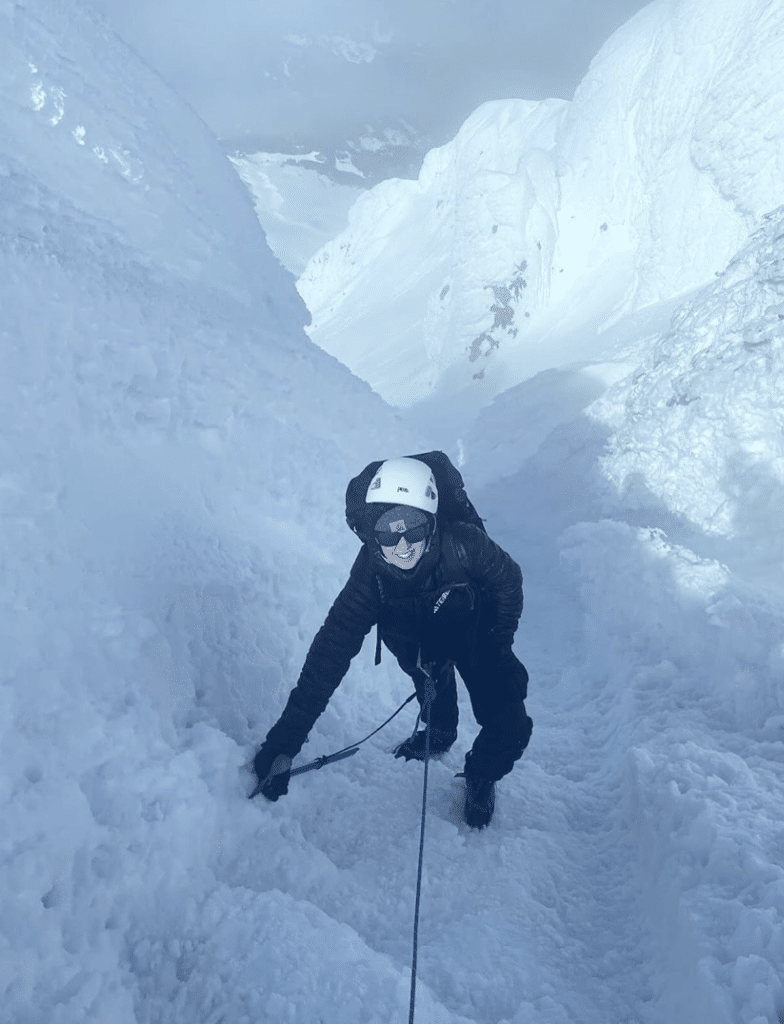
That’s why I typically look for pockets that are a bit higher up than at my hips. I love the Terrex Techrock down jacket for that reason, and it’s my go-to softshell since I know that my phone will stay safe and it won’t slip out of my pockets down the mountain.
If you plan on carrying anything valuable up to the summit and you don’t want the items in your pocket to rub along the way, then placement on your jacket might be more important than you think.
Weight
All additional weight can make a difference when you are working your way up a tough alpine climb. You want to find a balance between a sturdy-enough jacket that keeps you warm, but not one that will weigh down your pack and that will take up a lot of space.
I like to check two things when I purchase a new mountaineering jacket. The first is the regular weight that the brand shares with you online, and the second is how small it will roll up when you put it within your pack. If you do plan on visiting an outdoor supply store, take your backpack with you and see how much space both your hardshell and softshell jackets take up–and how much weight they might add, as well.
Hood
When you summit mountains, you need to have a helmet, which means you also need a jacket that can accommodate the type of helmet you’ve chosen. This is another reason why I recommend bringing your gear to the store when you want to try a variety of jackets on. You want to make sure that your hood will fit over whatever helmet model you have.
FAQs
Here are some frequently-asked questions that many new mountaineers ask when it comes to picking their first jacket.
Conclusion
As always, having the right gear for your mountaineering trip can make all the difference when it comes to the success of your adventure. The right jacket (or jackets depending on what you need) should take some research to find since they are such an essential part of your gear kit when you get into mountaineering.
Have any questions when it comes to choosing your mountaineering jacket? Let me know in the comments!


