
Alaska National Parks: 17 Incredible Parks You Have to Visit
This guide contains affiliate links to trusted partners.
Looking to explore some of the Alaska National Parks?
One of the main reasons to head up north? To visit the Alaska national parks! That was the reason Daniel and I decided to visit this incredible state, and we’re likely to go back and explore some more! However, knowing what designations each of the parks has within the National Park Service can be a bit tricky, so we’ll go over that as well as the parks available to explore.
[lwptoc hideItems=”1″]
Map of national parks in Alaska
What qualifies as Alaska national parks?
Here is some information on what qualifies as a national park and what are the differences between this and other designations.
National parks
Alaska ties California for the most national parks in the country at eight main parks–we were surprised by how many national parks there were just in one state!
National parks are big areas set aside to protect important nature spots or unique land features. Managed by the National Park Service, the main goal is to keep these places safe for both the environment and future generations.
The national parks in Alaska include: Denali National park and Preserve, Gates of the Arctic National Park and Preserve, Glacier Bay National Park and Preserve, Katmai National Park and Preserve, Kenai Fjords National Park and Preserve, Kobuk Valley National Park and Preserve, Lake Clark National Park and Preserve, and Wrangell-St. Elias National Park and Preserve.
National monuments and preserves
National monuments and preserves are federally designated areas that aim to protect specific natural, historical, or cultural features. Unlike national parks, which are often large and focus on multiple features and ecosystems, national monuments are usually smaller and more focused on safeguarding a particular landmark, like a historic site or geological formation.
National preserves are similar to national parks but generally allow for a wider range of activities, including hunting, fishing, and resource extraction, as long as these activities don’t impact the overall conservation goals.
Both monuments and preserves are managed by various federal agencies, which could include the National Park Service, the Bureau of Land Management, or the U.S. Forest Service.
The national monuments and preserves in Alaska include: Alagnak Wild River, Aniakchak National Monument and Preserve, Bering Land Bridge National Preserve, Cape Krusenstern National Monument, Noatak National Preserve, and Yukon-Charley Rivers National Preserve.
National historical parks and historical areas
National historical parks are specially designated areas that focus on preserving and interpreting historical sites and landscapes. Managed by the National Park Service, these parks aim to educate the public about significant periods, events, or human history. Unlike national parks, which primarily emphasize natural beauty and conservation, national historical parks are centered on cultural and historical significance.
They often include a mix of natural and man-made features, such as battlefields, historic homes, and archaeological sites. Through visitor centers, guided tours, and educational programs, national historical parks offer an immersive way to engage with the past while ensuring its preservation for future generations.
The national historical parks in Alaska include: Aleutian World War II National Historic Area, Klondike Gold Rush National Historical Park, and Sitka National Historical Park.
Full list of national parks in Alaska
Here is a full, bulleted list of the national parks in Alaska, as well as historical parks, monuments and preserves.
National parks
- Denali National Park and Preserve
- Gates of the Arctic National Park and Preserve
- Glacier Bay National Park and Preserve
- Katmai National Park and Preserve
- Kenai Fjords National Park and Preserve
- Kobuk Valley National Park and Preserve
- Lake Clark National Park and Preserve
- Wrangell St.-Elias National Park and Preserve
National monuments and preserves
- Alagnak Wild River
- Aniakchak National Monument and Preserve
- Bering Land Bridge National Preserve
- Cape Krusenstern National Monument
- Noatak National Preserve
- Yukon-Charley Rivers National Preserve
Historical parks
- Aleutian World War II National Historic Area
- Klondike Gold Rush National Historical Park
- Sitka National Historical Park
Alaska national parks: what you need to know
Here’s what you need to know if you are planning on making a visit to some of the national parks in Alaska, including how to get to these remote destinations and what to do when you’re there.
 Denali National Park and Preserve
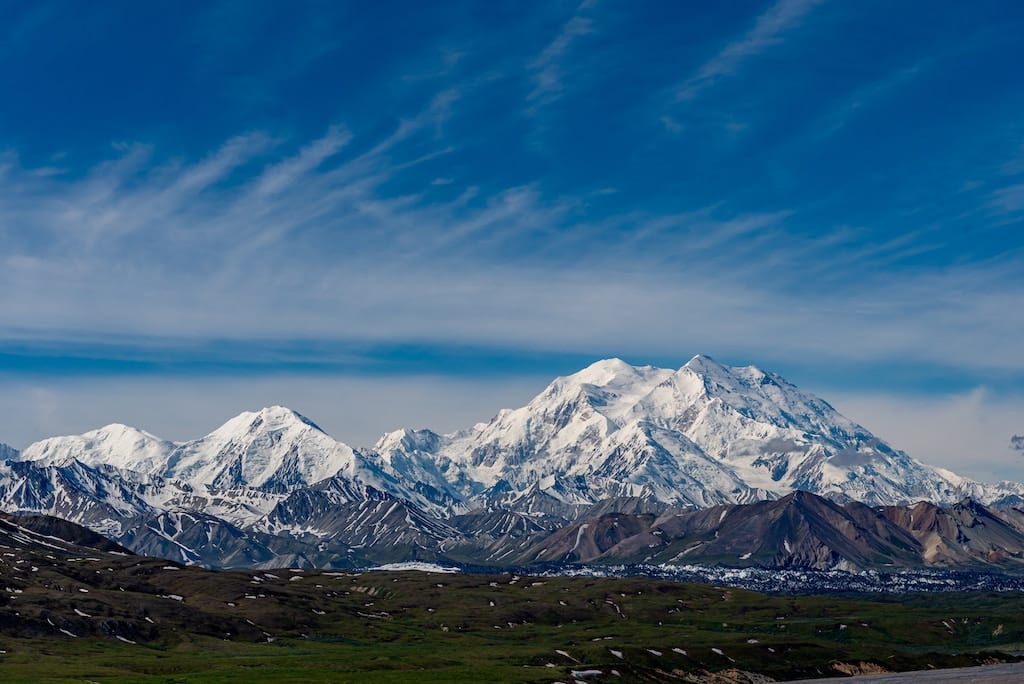 Denali National Park and Preserve
Denali National Park is a crown jewel in Alaska’s wilderness, offering a pristine expanse of untamed beauty that captures the imagination like nowhere else. Home to North America’s tallest peak, Denali, which soars to an elevation of 20,310 feet, this park is a haven for adventurers and nature enthusiasts alike.
When you visit Denali National Park, you’ll see landscapes marked by sprawling tundra, alpine forests, glaciers, and snow-capped mountains that seem to touch the sky. The park is also a sanctuary for iconic wildlife; grizzly bears, moose, caribou, and wolves roam freely across its vast 6.1 million acres.
Beyond the stunning vistas, Denali offers a range of outdoor activities. You’ll want to check out Denali National Park hiking, mountaineering, and white-water rafting to less strenuous pursuits like wildlife photography and stargazing. The park serves as an excellent platform for experiencing the Northern Lights in their full splendor, especially during the late fall and winter months. There are so many things to do in Denali National Park, that you will need at least three days here!
Whether you’re a thrill-seeker or simply someone seeking solace in nature’s grandeur, Denali National Park is an indispensable stop on any Alaska road trip.
Top things to do: Hiking trails, wildlife viewing, photography.
How to get there: The most common way to get there is to drive or take the train from Anchorage.
Where to stay: There are plenty of options for Denali National Park hotels, but I recommend staying near Healy.
Entry fee: There is a $35 entry fee per day.
[vc_row][vc_column][vc_cta h2=”Do you need help with your Denali National Park trip?”]
 I offer custom national park itinerary planning as a service to help you make the most of your adventures! These itineraries cover everything from where to stay, eat, what to do, and more!
⭐CHECK OUT CUSTOM NATIONAL PARK ITINERARY PACKAGES HERE⭐
[/vc_cta][vc_column_text]
 Gates of the Arctic National Park and Preserve
 Gates of the Arctic National Park and Preserve
Gates of the Arctic National Park is an unparalleled wilderness experience, set far above the Arctic Circle in Alaska’s Brooks Range. Covering an astonishing 8.5 million acres, this is the least-visited national park in the entire national park system, not because it lacks beauty, but because of its remoteness.
There are no roads and you won’t find a visitor center here; access is by foot or air taxi, making it the ultimate destination for those seeking solitude and an unfiltered connection with nature.
This park is truly a landscape sculpted by ice and fire, where jagged mountains give way to sweeping valleys carved by glaciers and rivers. It offers the purest form of wilderness adventure. Hiking, river rafting on the six Wild Rivers, and backcountry camping opportunities abound for the daring traveler. Wildlife thrives in the isolation—grizzlies, Arctic foxes, and caribou roam freely, while golden eagles soar above.
As the northernmost national park, if you plan to visit, you’ll be one of the very few who get to witness its beauty.
Top things to do: Wildlife viewing, backcountry camping, rafting.
How to get there: You will need to hire an air taxi to take you from Fairbanks.
Where to stay: The best way to enjoy the park is to camp, but you can also stay in Fairbanks.
Entry fee: No entry fee required.
Glacier Bay National Park and Preserve
 Glacier Bay National Park and Preserve
Glacier Bay National Park in Southeast Alaska near Tongass National Forest is a breathtaking spectacle of icy wilderness that exemplifies nature’s grandeur. A UNESCO World Heritage site, the park covers 3.3 million acres of rugged mountains, dynamic glaciers, temperate rainforest, and deep fjords.
A boat tour offers the best gateway to witness the awe-inspiring tidewater glaciers as they calve icebergs into the shimmering bay, an experience so powerful it seems as if the Earth itself is alive.
The park is a marine sanctuary teeming with aquatic life including humpback whales, orcas, sea otters, and various species of salmon. Birdwatchers can delight in spotting puffins, sea lions, bald eagles, and other avian inhabitants. For those looking to delve deeper into its wilderness, kayaking, hiking, and camping experiences are abundant, offering a closer look at the park’s intricate ecosystems.
Top things to do: Kayaking, wildlife viewing, whale watching.
How to get there: Cruise ship is the most common way to get here, though you can also fly to Juneau and rent a car from there.
Where to stay: I recommend Norwegian cruise line— we went with them to visit Glacier Bay National Park and had a fantastic experience. However, you can also stay in some Juneau hotels if you are traveling by land.
Entry fee: There is a $35 entry fee per day.
Katmai National Park and Preserve
 Katmai National Park and Preserve
Katmai National Park, located on the Alaska Peninsula, offers a wilderness experience unlike any other and is one of the more remote national parks in Alaska. Known primarily for its extraordinary population of brown bears, this park is a must-visit for wildlife enthusiasts.
Every year, visitors gather at spots like Brooks Falls to witness the awe-inspiring sight of bears fishing for salmon, a scene that has become emblematic of Alaska’s untamed beauty. It’s hard to imagine that when you visit Katmai National Park that it’s not for these amazing creatures!
But Katmai is more than just bears. The park also boasts the otherworldly Valley of Ten Thousand Smokes, an area filled with ash flow and lava formations that is a vivid testament to the region’s volcanic history. Adventure seekers can explore backcountry trails, fish in wild rivers, and kayak along miles of rugged coastline.
While many of Alaska’s national parks offer a glimpse into the state’s wild landscapes, Katmai provides an intimate look at the coexistence of various forces of nature: the fierceness of its wildlife, the rawness of its geology, and the serenity of its wilderness. For anyone looking to witness the primal essence of Alaska, Katmai National Park is an unmissable experience.
Top things to do: Bear viewing, hiking trails, kayaking.
How to get there: You will need to take an air taxi from either Anchorage, Homer, or Kodiak. There is only one dirt road that leads to the park from King Salmon.
Where to stay: Brooks Lodge or Brooks Camp.
Entry fee: No entry free required.
[vc_row][vc_column][vc_cta h2=”Hiking essentials”]Recommended hiking boots: Salomon Quest 4 Gore-tex 🥾
Recommended jacket: The North Face Antora Jacket 🧥
Recommended hiking poles: Black Diamond Trail Cork Trekking Poles 🌲
Recommended day pack: Osprey Daylite Pack 🎒
Hike like a pro: Get an AllTrails Pro membership! 🗺
[/vc_cta][vc_column_text]
Kenai Fjords National Park and Preserve
 Kenai Fjords National Park and Preserve
Kenai Fjords National Park, located on the Kenai Peninsula in south-central Alaska, is a stunning tapestry of glacial beauty and marine wonder. One of the best ways to explore this park is by boat, navigating through fjords that have been intricately carved by millennia of glacial activity.
The Harding Icefield, one of the largest in the United States, serves as a frozen reservoir that feeds over 40 glaciers, creating an awe-inspiring, dynamic landscape.
Marine life is abundant here. Visitors have the chance to see humpback whales breaching, orcas hunting, and seals lounging on icebergs. The sea cliffs are a sanctuary for puffins, cormorants, and eagles, making it a paradise for birdwatchers.
On land, the Exit Glacier area offers accessible hiking trails that lead you right to the edge of a glacier, allowing for an up-close look at these icy giants.
I was not expecting much when visiting Kenai Fjords National Park, but it actually was one of my favorites of the Alaska parks because it is so unique.
Top things to do: Wildlife viewing, kayaking, boat tours.
How to get there: Kenai Fjords National Park is one of the best things to do in Seward. Most tend to drive from Anchorage.
Where to stay: I recommend staying at one of the Seward hotels for easy access to the dock.
Entry fee: There is a $35 per day entry fee.
Kobuk Valley National Park and Preserve
 Kobuk Valley National Park and Preserve
Kobuk Valley National Park is one of Alaska’s least-visited and least accessible parks, but it more than makes up for it in untouched wilderness and unique natural features.
Located just north of the Arctic Circle, the park is home to the Great Kobuk Sand Dunes, often described as a desert within the Arctic. These towering dunes, some reaching up to 100 feet, stand in surreal contrast to the surrounding boreal forests and meandering Kobuk River.
The river itself is a vital migratory path for the Western Arctic caribou herd, offering visitors the chance to witness one of North America’s great wildlife spectacles as tens of thousands of caribou cross the river during their seasonal migrations.
This remote park ensures an experience of solitude and serenity, as well as the opportunity for backcountry adventures like hiking, boating, and fishing.
For those who venture to this remote wonder, Kobuk Valley National Park offers a vision of Alaska that is both surreal and breathtaking.
Top things to do: Boating, backcountry camping, hiking, fishing.
How to get there: You will need to take an air taxi from Anchorage to Kotzebue or from Fairbanks to Bettles. From there, you will need to take another plan to get to the park.
Where to stay: You will either have to camp or look into accommodations in Kotzebue or Bettles.
Entry fee: There is no entry fee required.
Lake Clark National Park and Preserve
 Lake Clark National Park and Preserve
Nestled between the mountainous terrains of the Alaska Range and the Cook Inlet, Lake Clark National Park is a mesmerizing blend of diverse ecosystems. Covering roughly 4 million acres, this national park is a treasure trove of scenic beauty, offering turquoise lakes, tumbling waterfalls, and towering mountain ranges in a wild landscape.
Lake Clark itself, the park’s namesake, is a pristine body of water perfect for kayaking, fishing, and even plane landings, as floatplanes are a common mode of transportation to this roadless wonder.
The park is a haven for spectacular wildlife, and it hosts a variety of abundant wildlife species including brown bears, moose, and bald eagles. You can spend your days hiking through lush alpine meadows filled with wildflowers or venture into the backcountry for multi-day expeditions.
For the culturally curious, the park also offers insight into the rich heritage of the Dena’ina Athabascan people, the indigenous inhabitants of the region.
Top things to do: Kayaking, hiking, wildlife viewing, backcountry camping.
How to get there: You will have to take an air taxi from Anchorage, Kenai, or Homer.
Where to stay: I recommend staying in Anchorage for the most options. There are plenty of Anchorage hotels available!
Entry fee: There is no entry fee required.
Wrangell-St. Elias National Park and Preserve
 Wrangell-St. Elias National Park and Preserve
Encompassing a staggering 13.2 million acres, Wrangell-St. Elias National Park is the largest national park out of all the national parks in the United States (the size of Yellowstone National Park six times over) and a monumental showcase of natural grandeur and vast wilderness.
The park is a labyrinth of towering mountain ranges, including the volcanic Wrangell Mountains and the icy St. Elias Range, which hosts some of the highest peaks in North America. It’s a place where massive glaciers stretch over a vast landscape, creating an otherworldly tableau of ice and rock.
Adventure-seekers will find no shortage of activities here. The park offers an array of experiences, from glacier trekking and mountaineering to river rafting and backcountry hiking. For those interested in cultural history, the abandoned copper mines and historic towns like Kennicott offer a glimpse into the region’s past as a copper center.
Access to Wrangell-St. Elias may be challenging, but the reward is unparalleled: an untouched wilderness that humbles and awes in equal measure. I was shocked when it became my favorite national park in Alaska, and if I have the chance to go back, I would in a heartbeat!
Top things to do: Hiking, backcountry camping, flightseeing.
How to get there: By flying, the easiest way to get there is to fly from Anchorage to McCarthy. You can also make the drive, which is approximately seven hours.
Where to stay: McCarthy or Kennicott offer the most options.
Entry fee: There is no entry fee required.
[vc_row][vc_column][vc_cta h2=”Join the community!”]Love the outdoors? Join my free Facebook community where we chat and share information about national parks, hiking, outdoor activities, and more!
JOIN HERE! ⛰️ [/vc_cta][vc_column_text]
Alaska national monuments and preserves
While not as visited or famous as the other parks, national monuments and preserves can be an amazing way to connect with nature–and you get to experience them without the crowds that come with the national parks in Alaska!
Alagnak Wild River
 Alagnak Wild River
The Alagnak Wild River, flowing through the remote landscapes of southwestern Alaska, offers a sublime experience of wilderness and adventure. Originating from Kukaklek or Nonvianuk Lakes in the Aleutian Range, this river winds through the tundra, boreal forests, and finally into Bristol Bay.
It’s a paradise for anglers, boasting some of the world’s best fishing for salmon, rainbow trout, Arctic grayling, and other native fish species. The annual salmon run, in particular, is a marvel of nature, attracting not just fishermen but also brown bears, bald eagles, and other predators in a vivid spectacle of life and survival.
But it’s not just about fishing; the Alagnak is also an incredible venue for river rafting, kayaking, and wildlife photography. The river’s braided channels are like a labyrinth, making for a unique navigational experience as you’re surrounded by the Alaskan wilderness. This is a place where you can truly unplug from the modern world and connect deeply with nature.
Top things to do: Wildlife viewing, fishing, boating.
How to get there: You will need to charter an air taxi from either Anchorage, King Salmon, Homer, Kodiak, Iliamna, or Soldotna.
Where to stay: There are several private lodges that offer accommodations along the river.
Aniakchak National Monument and Preserve
 Aniakchak National Monument and Preserve
Aniakchak National Monument and Preserve is one of the most remote and least visited units in the U.S. National Park System, but that solitude is part of its allure.
Located on the Alaska Peninsula, this 600,000-acre area is centered around the Aniakchak Caldera, a six-mile-wide volcanic crater formed about 3,500 years ago. The landscape inside the caldera is surreal, dotted with lava flows, cinder cones, and the Surprise Lake, which drains through a dramatic lava-tube to create the Aniakchak River.
For those who brave the unpredictable weather and challenging logistics, Aniakchak offers unparalleled opportunities for wilderness exploration. Kayaking on Surprise Lake, hiking along the vast crater, and fishing in the nutrient-rich waters provide unique adventures that you won’t find in more accessible locations.
Wildlife viewing is also exceptional, with possibilities to spot brown bears, caribou, and countless bird species.
Visiting Aniakchak National Monument and Preserve isn’t for everyone, but for the intrepid adventurer, it offers an unparalleled experience of isolation, natural beauty, and geological wonder. It’s a place where you can truly escape and find yourself immersed in the wild, untamed spirit of Alaska.
Top things to do: Backcountry camping, hiking, kayaking.
How to get there: You will need to fly on a charter plane from King Salmon or Port Heiden.
Where to stay: Backcountry camping is the only main accommodation option.
Bering Land Bridge National Preserve
 Bering Land Bridge National Preserve
Bering Land Bridge National Preserve is a fascinating fusion of geological history, indigenous culture, and Arctic ecosystems. Located in western Alaska, this preserve offers a glimpse into the ancient land bridge that once connected Asia and North America during the Ice Age, allowing both people and wildlife to migrate.
Today, the 2.7 million-acre preserve is a rugged wilderness featuring a remarkable range of landscapes—from volcanic craters and lava flows to tundra meadows and ice fields.
What sets this preserve apart is its unique blend of natural and cultural significance. It’s a treasure trove of archeological sites that offer insights into the lives of early indigenous peoples. Moreover, the preserve is rich in biodiversity, home to various Arctic animals such as muskoxen, caribou, and even marine mammals like seals and walrus along its coastlines.
For the adventurous soul, Bering Land Bridge offers unparalleled opportunities for backcountry hiking, wildlife viewing, and even coastal kayaking. The preserve is also a haven for birdwatchers, with numerous species that are rarely seen elsewhere.
Top things to do: Hiking, wildlife viewing, backcountry camping.
How to get there: You will have to charter a plane from Anchorage to arrive here.
Where to stay: The only available accommodations are backcountry camping.
[vc_row][vc_column][vc_cta h2=”Camping essentials”]Recommended tent: Marmot Tungsten 2 person ⛺
Recommended stove: Coleman Cascade 🔥
Recommended sleeping bag: REI Co-Op Downtime 😴
Recommended mess kit: Sea to Summit Delta Camp Set 🍽
[/vc_cta][vc_column_text]
 Cape Krusenstern National Monument
 Cape Krusenstern National Monument
Cape Krusenstern National Monument in northwest Alaska is a remarkable blend of rich cultural history and natural beauty. Stretching over 649,000 acres, this monument showcases a series of 114 beach ridges along the coast of the Chukchi Sea, each one a record of human history and changing climate over the last 5,000 years.
Archeological evidence suggests that this region served as a seasonal hunting ground and meeting place for indigenous peoples for thousands of years, making it an invaluable site for understanding human migration and adaptation.
The monument is not just an historical treasure, but also an ecological one. The mix of tundra, wetlands, and coastline creates diverse habitats that sustain an array of wildlife. Caribou, muskoxen, and even marine mammals like seals and walruses can be spotted in this remote wilderness. Birdwatchers will be delighted by the variety of migratory birds that nest in the area during the summer months.
For the intrepid traveler willing to venture off the beaten path, Cape Krusenstern offers a deeply enriching experience.
Top things to do: Wildlife viewing, hiking, kayaking.
How to get there: You will have to take an air taxi from Anchorage to Kotzebue.
Where to stay: The only available accommodations are backcountry camping.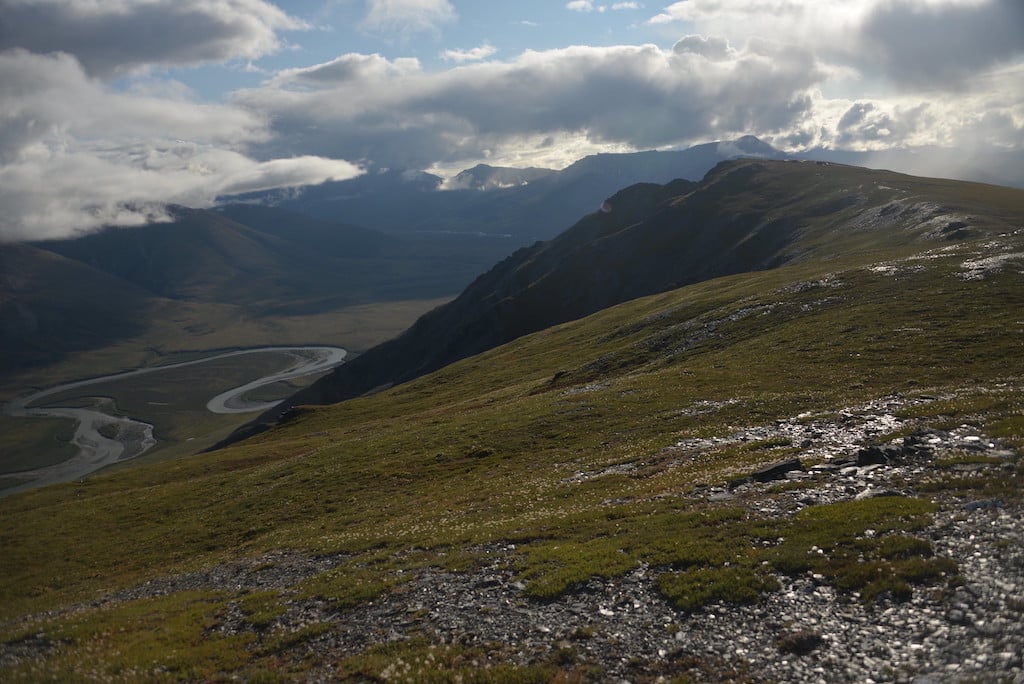 Noatak National Preserve
Noatak National Preserve in Northwest Alaska is a pristine bastion of Arctic wilderness. The preserve’s crown jewel is the Noatak River, one of the last undisturbed river systems in North America and the United States’ public lands.
Flowing for more than 400 miles, it courses through mountain ranges and expansive tundra, providing a vital waterway that supports an array of wildlife. This is a place where you can experience the Arctic in its purest form, away from human interference.
Noatak is an ecological haven, hosting diverse wildlife from caribou and muskoxen to Arctic foxes and wolves. The preserve is part of the largest essentially untouched watershed in the United States, making it a critical area for scientific research on Arctic ecosystems. Birdwatchers will find the preserve especially compelling, with species like peregrine falcons and golden eagles soaring in the skies.
For outdoor enthusiasts, Noatak offers unparalleled opportunities for kayaking, rafting, hiking, and fishing. Its isolation ensures that those who venture here will find solitude and an intimate connection with nature.
Top things to do: Hiking, fishing, kayaking.
How to get there: You will have to charter a flight or a boat to Bettles or Kotzebue.
Where to stay: Bettles or Kotzebue are your best best when it comes to accommodations near the preserve.
 Yukon-Charley Rivers National Preserve
 Yukon-Charley Rivers National Preserve
Yukon-Charley Rivers National Preserve, stretching across 2.5 million acres in eastern Alaska, is an untamed sanctuary where the past and present converge. The area is defined by its two major rivers: the Yukon, a historic waterway that played a vital role during the Klondike Gold Rush, and the Charley, a faster, less navigated tributary.
Both offer a variety of adventures, from tranquil canoeing and world-class fishing to white-water rafting for those craving an adrenaline rush.
The preserve is a window into the history of the region, featuring remnants of Native American habitation, early exploration, and gold mining. Several well-preserved cabins and artifacts give visitors a tangible link to the hardships and triumphs of those who sought fortune or solace in these remote landscapes.
Wildlife thrives here too, with populations of moose, bears, and wolves roaming the forests, and an array of bird species like peregrine falcons and bald eagles soaring above.
Top things to do: Wildlife viewing, historic cabins, rafting.
How to get there: You will need to charter a plane from Fairbanks, Circle, or Tok. You can also drive to the towns of Eagle or Circle and charter a flight from there.
Where to stay: The best places to stay are near the towns of Eagle or Circle.
Alaska historical parks
While the Alaska national parks are mostly focused on nature, there is plenty of culture and history there too. These overlooked sites tell a story about the region and the mark that people made on such a vast wilderness like Alaska.
 Aleutian World War II National Historic Area
 Aleutian World War II National Historic Area
The Aleutian World War II National Historic Area, located on the island of Unalaska in Alaska’s Aleutian chain, offers a poignant look at a lesser-known chapter in American history. This site commemorates the Aleutian Campaign during World War II, when U.S. military forces defended the Aleutian Islands against Japanese invasion.
It was the only World War II campaign fought on North American soil, and the site provides educational resources and preserved historical structures that bring this period to life.
The area also pays tribute to the Aleut people, who faced forced evacuations and internment by the U.S. government during the war. Their story is a significant part of the narrative, capturing the resilience and suffering of a community caught in the crossfire of global conflict.
Visiting this National Historic Area is not just a journey into the past but also an exploration of a unique landscape.
Top things to do: Historical army base.
How to get there: You can take a daily flight from Anchorage, or make the very long drive to the site. You can also book a ferry, but it only operates monthly.
Where to stay: There are several hotels in the nearby town of Unalaska.
Klondike Gold Rush National Historical Park
 Klondike Gold Rush National Historical Park
Klondike Gold Rush National Historical Park transports visitors back to the end of the 19th century, when the discovery of gold in Canada’s Yukon Territory set off one of the most frenzied and fabled gold rushes in history.
As one of the best things to do in Skagway, the park serves as a living museum, offering a glimpse into the lives and challenges of the thousands of fortune-seekers who passed through this gateway en route to the Klondike goldfields.
The park preserves a host of historic buildings, including saloons, shops, and hotels, recreating the atmosphere of a bustling frontier town. Numerous hiking trails retrace the steps of the stampeders, such as the world-famous Chilkoot Trail, a 33-mile trek that crosses from Alaska into British Columbia and one of the best hikes in Alaska, testing your mettle much like it did the original prospectors.
But it’s not just about the past; the park is set against the backdrop of stunning Alaskan scenery—towering mountains, lush forests, and glacial rivers.
Top things to do: Historic buildings, hiking.
How to get there: You can fly to Juneau and take the South Klondike Highway to Skagway.
Where to stay: There are a number of Skagway hotels available that give you easy access to the park.
Sitka National Historical Park
 Sitka National Historical Park
Sitka National Historical Park, located on Baranof Island in southeast Alaska, is a vibrant tapestry of natural beauty and rich cultural heritage. Established to commemorate the 1804 Battle of Sitka between indigenous Tlingit people and Russian colonizers, the park serves as a vital reminder of the area’s complex history.
It showcases remarkable totem poles, replicas and originals, each telling its own story through intricate carvings, thereby providing a captivating introduction to Native Alaskan cultures.
The park is also a natural wonderland. Situated against the backdrop of towering spruce and hemlock trees, it offers a coastal environment teeming with life. Walking trails guide you through lush rainforests and along the rugged coastline where you can spot an array of wildlife including bald eagles, brown bears, and humpback whales in the nearby waters.
Top things to do: Totem poles, wildlife viewing.
How to get there: You can fly from Juneau, Seattle, and Anchorage.
Where to stay: There are accommodations available in the nearby town of Sitka.
Tips for visiting national parks in Alaska
Here are some of my tips for visiting the Alaska national parks so you’re ready to enjoy these incredible landscapes when you arrive.
- Plan ahead for permits and reservations: Some parks in Alaska require permits, especially for backcountry camping or certain activities. Reservations for lodges or campgrounds can also fill up months in advance, so make sure to plan your trip well ahead of time. Also make sure that if you are planning on visiting more than one national park that you have purchased your annual parks pass.
- Dress in layers: Alaskan weather is unpredictable and can vary dramatically even within a single day. It’s advisable to dress in moisture-wicking base layers, insulating middle layers, and waterproof outer layers. Don’t forget hats, gloves, and suitable footwear to handle everything from rainy hikes to snowy overlooks.
- Bear safety: Alaska is home to both grizzly and black bears. Always carry bear spray and know how to use it. Make noise while hiking to alert bears to your presence, and store food properly to avoid attracting them into your camp.
- Invest in quality gear: The conditions can be harsh, and having reliable gear is not just a matter of comfort but also of safety. Whether it’s a robust tent, a reliable cooking system, or a GPS device with offline maps, quality gear will make your experience much more enjoyable and safer.
- Understand the scale: Distances in Alaskan national parks are vast. Activities that look close on a map can be a day’s journey apart. Make sure to allocate sufficient time to travel between points of interest, especially on rough roads like the Denali National Park road, and always carry sufficient supplies, especially water and food, in case the trip takes longer than expected.
Conclusion: Alaska national parks
Visiting an Alaska national park is like experiencing an entirely different world. Daniel and I couldn’t get over how beautiful the state was, and with so many amazing parks to explore, you’ll never run out of cultural and natural wonders to see.
Have any questions about Alaska national parks? Let me know in the comments!
[vc_row][vc_column][vc_cta h2=”National park essentials”]You’ll need to enter: National parks pass 🎟️
Document your trip: National parks journal ✏️
Wear your national parks love: National parks shirts 👕
[/vc_cta][vc_column_text]
Like this post? Save it for later!

Want more information on Alaska? Check out these articles:


